REVIEW · TOKYO
Ramen Making from Scratch – Tokyo Ultimate Cooking Class
Book on Viator →Operated by Patia's Japanese Cooking Class · Bookable on Viator
Hands-on ramen beats watching from afar. This Tokyo class teaches Jiro-style ramen from flour to bowl, with thick noodles, a garlic-forward broth, and generous chashu. I love the full-dish focus, not just one cooking step, and I love that you leave with a recipe you can recreate at home. One catch: it’s not set up for vegetarians or vegans.
You’ll meet, cook together, then sit down for the payoff: tasting what you made. The class runs about two hours, with a cooking block followed by a tasting period, and it caps at a small group size (which keeps things friendly and lets you actually do the work). Expect a simple but satisfying lunch included in the experience.
One more thing to know: this isn’t a quick snack lesson. It’s a hands-on cooking session where the goal is to learn the process well enough to repeat it later. And if you want chashu switched from pork to chicken, you’ll need to request it more than 48 hours ahead.
In This Review
- Key points worth your attention
- Jiro-Style Ramen From Scratch: what you’re really learning
- The 12:20–13:30 flow: how the class stays on track
- Making fresh noodles from flour: the thick Jiro texture lesson
- Garlic-infused soup: building flavor you can actually repeat
- Chashu pork (or chicken) and topping strategy
- Lunch, photos, and the tasting that finishes the lesson
- Price and value: is $91.45 worth it in Tokyo?
- Who should book this ramen class, and who should skip it
- Should you book Ramen Making from Scratch in Tokyo?
- FAQ
- How long is the ramen making class?
- What time do I need to meet?
- What do I learn during the class?
- Is lunch included?
- Does the tour include a walking tour of Akihabara?
- Can I change the chashu from pork to chicken?
- Are vegan or vegetarian options available?
- What group size should I expect?
- How does payment and tickets work?
- What if the weather is bad?
Key points worth your attention
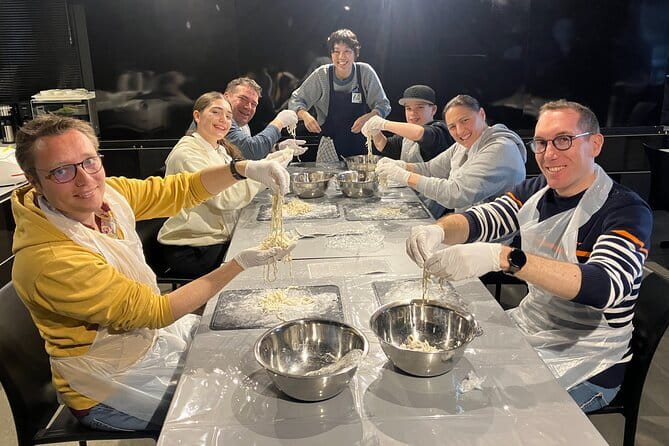
- Full bowl training: noodles, broth, and toppings all get made from scratch
- Jiro-style focus: thick noodles plus garlic-infused soup and chashu
- Small group size: maximum 12 people for more hands-on time
- Schedule that works: cooking first, tasting second, with lunch included
- Easy home transfer: you take home the recipe to remake it later
Jiro-Style Ramen From Scratch: what you’re really learning
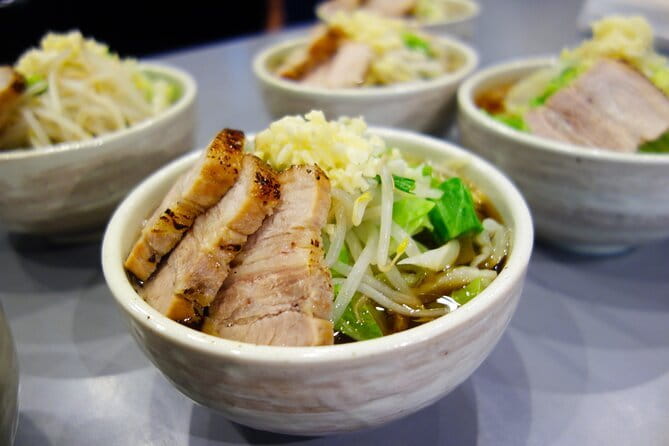
This class is built around one clear goal: make a complete Jiro-style ramen bowl yourself, not just assemble toppings. That matters because ramen is a system. If you only learn one piece—like noodles or broth—you end up guessing on the rest when you try it at home. Here, you learn the workflow: make the noodles, prepare the soup, cook the chashu, then put it all together.
The Jiro-style flavor profile is also specific. You’re working with thick noodles and a broth that’s heavy on garlic, then topping it with generous chashu slices and vegetables. That combination is why this style is so recognizable in Japan: it’s bold, hearty, and built to hold up in a real meal, not just a quick bowl.
I also like that the experience is described as replicable at home. You’ll be shown how to make the components and then you take the recipe away. That turns a fun Tokyo meal into something practical for your kitchen back home.
The downside is straightforward: vegan and vegetarian options aren’t available. So if your group needs plant-based ramen, you’ll want a different cooking class.
You can also read our reviews of more tours and experiences in Tokyo.



The 12:20–13:30 flow: how the class stays on track
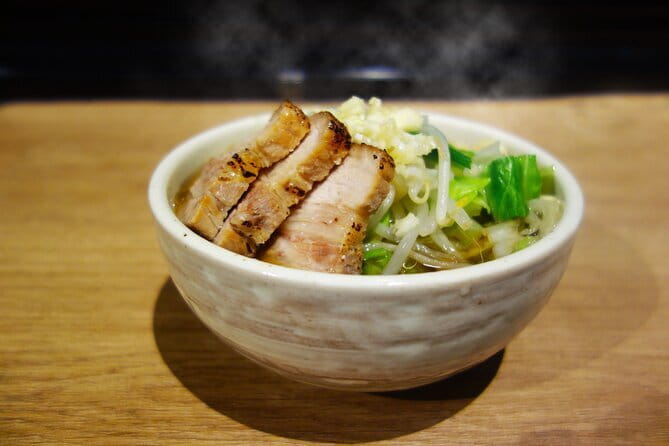
Timing is simple and easy to plan around. You meet at 12:20, then cooking runs 12:30 to 13:30. After that, you shift into 13:30 tasting—so you don’t spend the entire session standing over a pot without getting to eat.
That structure is smart. First you build the parts. Then you taste what you built. It also helps you understand what changes you can control: noodle texture, soup richness, and the balance of toppings. When you taste right after cooking, it’s easier to remember what worked and what you’d adjust next time.
You’ll also want to know this ends back at the meeting point. There’s no hotel pickup or drop-off, so plan on getting there on your own. The good news is that it’s noted as near public transportation, which makes it much easier to fold into a day in Tokyo.
And since the class has a maximum of 12 travelers, it’s not one of those giant factory-style cooking demos. You should get a more personal experience while still moving at a group pace.
Making fresh noodles from flour: the thick Jiro texture lesson
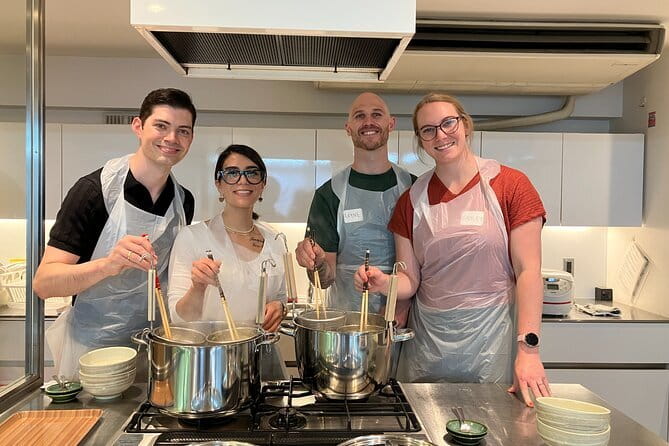
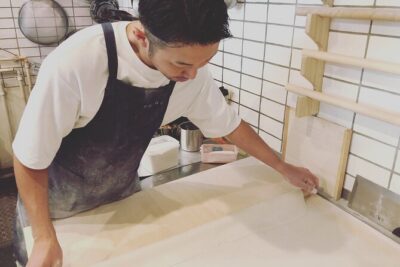
A big reason this class gets praised is that it starts where ramen really starts: with the noodles. You’ll make noodles from flour, and that’s not a throwaway detail. Fresh noodles change everything—how the bowl feels, how it holds broth, and how the whole meal reads when you eat it.
In ramen terms, thick noodles are the point of Jiro-style comfort. Thick means they have more structure and chew. It also means they can be more forgiving if your broth is bold and rich (like the garlic-infused soup you’ll learn to make). When you make them yourself, you learn how the dough and shaping translate into the final bite.
What to expect during the noodle portion is a hands-on workload. You’re not just watching. You’re working with dough and learning the steps well enough to repeat them. For home cooking, that’s the real value: you don’t need Japanese kitchen gear or fancy ingredients to recreate the method—you just need the recipe you take home and the confidence from having done it here.
If you’re the type who likes to understand why food turns out the way it does, this is a strong fit. Noodle-making teaches you timing and texture more than it teaches you theory.
Garlic-infused soup: building flavor you can actually repeat
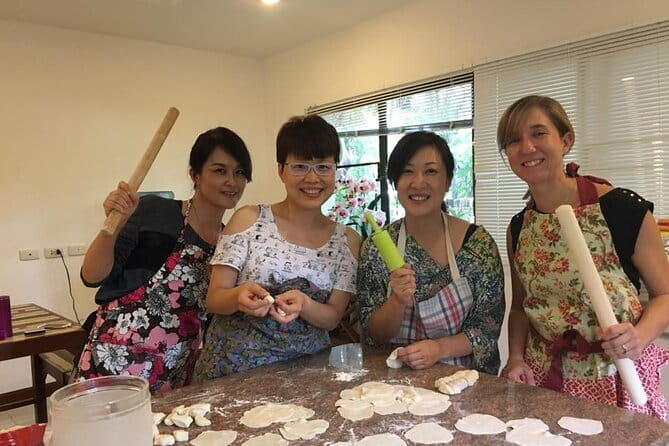
The broth is where this style gets its personality. You’ll prepare a garlic-infused soup that’s described as rich, and the way ramen broth tastes is all about process—heat control, infusion time, and how the base components come together.
Learning the soup in a class like this is valuable because home cooks often struggle with ramen depth. They can follow an ingredients list, but without guidance on method, it can come out flat or overly aggressive. Here, you’re being taught the broth component as part of a full dish, which makes it easier to match the noodle texture and toppings.
You’ll also connect the broth to the rest of the bowl. Thick noodles pair with a robust, garlic-forward soup. Chashu fat and savory seasoning add weight. Vegetables bring balance. Once you taste it, you’ll understand why this is considered a signature combination.
One practical takeaway: when you recreate this at home, you’ll likely focus on consistency—how much garlic flavor you want, and how the soup body should feel against thick noodles. That’s the kind of adjustment you can only make confidently if you taste your own result, then compare to the goal.
Chashu pork (or chicken) and topping strategy
The class doesn’t stop at broth and noodles. You’ll also cook the chashu—the pork topping that anchors the bowl. Chashu is one of those foods where technique matters: it’s about tender slices and that slow-cooked, savory character that makes ramen feel complete.
It’s also flexible, depending on what you ask for ahead of time. If you let them know more than 48 hours in advance, they can change the chashu from pork to chicken. That’s a helpful option if your group eats differently than the standard menu, and it’s worth planning for early so you don’t miss the cutoff.
During this part of the class, you’ll likely see how the chashu connects to the soup. Fat and seasoning influence the overall taste. When you cook it yourself, you’re learning the method behind that connection—not just repeating a list of steps later.
Topping the bowl is also part of the learning. Jiro-style ramen typically isn’t shy with toppings: generous chashu slices plus vegetables. When you assemble your own bowl, you start to understand portioning. That’s a skill many people skip when they try to make ramen at home, and it can be the difference between a good bowl and a great one.


Lunch, photos, and the tasting that finishes the lesson
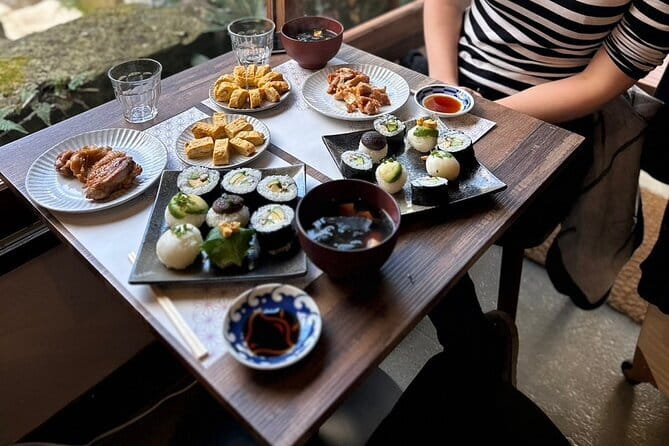
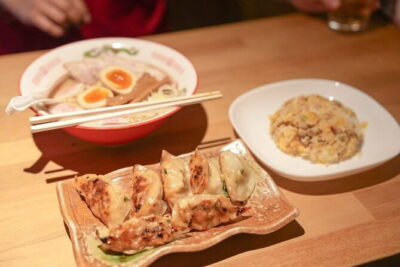
This experience includes lunch, and the big point of the final stretch is tasting time. You move from cooking into tasting at 13:30, which is perfect because it keeps the flavors fresh in your memory. You can notice noodle texture immediately, and you can taste how the garlic-infused soup behaves with the toppings.
Another nice perk: you’ll have later-downloadable photographs during the experience. That’s handy if you want to remember how your bowl looked and what the process involved. It also adds to the fun factor—especially for families or groups celebrating something small.
Based on the overall feedback, this class tends to land as genuinely enjoyable, not stiff or overly technical. People describe it as fun, with staff that are flexible and easy to be around. That matters because noodle and broth work can get intimidating if the atmosphere is tense. Here, the experience is built to feel like cooking together and then sharing the results.
Price and value: is $91.45 worth it in Tokyo?

At $91.45 per person, this isn’t the cheapest thing you can do in Tokyo. But for what you get, it can feel like good value. You’re paying for more than a meal. You’re paying for a structured, guided, hands-on class where you learn multiple components—noodles, garlic-infused soup, and chashu—plus you get lunch and a recipe you can recreate later.
In Tokyo, cooking classes can range widely. What makes this one appealing is the full-dish learning: you’re not just doing one step, and you’re not leaving without tasting your work. A two-hour format is also a practical sweet spot. It’s long enough to learn real technique, but short enough to fit into a normal sightseeing day.
Another value signal: it’s limited to a maximum of 12 travelers. Smaller groups usually mean more attention and a better chance to participate.
If your goal is a simple ramen dinner, you’d do fine anywhere in Tokyo. But if your goal is learning the method you’ll actually use again, that’s where the price starts to make sense.
Who should book this ramen class, and who should skip it
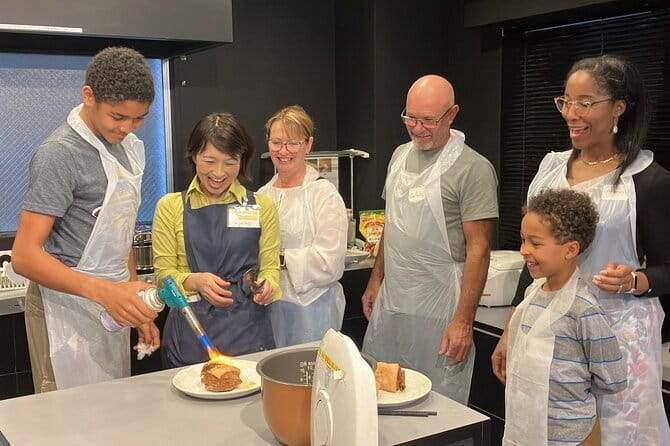
This works best for people who want hands-on cooking and want to bring skills home. It’s especially good if you’re the kind of person who loves eating ramen but also likes recreating meals at home. You’ll learn how a Jiro-style bowl comes together and how to reproduce the components rather than just the final taste.
It can also be a solid family option. The tone coming through in feedback is that families enjoy it together, and that the staff tends to be flexible. If you’re traveling with kids, just remember this is still a real cooking session, so younger kids may or may not enjoy the pace.
Skip it if:
- You need vegetarian or vegan options (none are offered).
- You’re looking for an Akihabara walking tour included with the experience (this one does not include it).
Should you book Ramen Making from Scratch in Tokyo?
Yes, if you want more than a ramen meal. This class is a practical way to learn a full Jiro-style ramen bowl: thick noodles, garlic-infused soup, and chashu, plus lunch and a take-home recipe. The small group size and structured timing make it feel doable, even if you’ve never cooked ramen before.
Hold off if your group needs vegetarian/vegan food, or if you were hoping for it to pair automatically with an Akihabara walk. You can still do Akihabara with a separate booking option, but this specific experience keeps its focus on the cooking.
If you want a Tokyo activity that gives you something you can repeat at home, this is the kind of class that delivers.
FAQ
How long is the ramen making class?
The experience is about 2 hours, with cooking scheduled from 12:30 to 13:30 and tasting at 13:30.
What time do I need to meet?
You meet at 12:20, then the class starts at 12:30.
What do I learn during the class?
You’ll learn to make Jiro-style ramen components from scratch, including fresh noodles, a garlic-infused soup, and chashu.
Is lunch included?
Yes. Lunch is included as part of the experience.
Does the tour include a walking tour of Akihabara?
No. This ramen class does not include the Akihabara walking tour. A separate tour pairing is available if you want both.
Can I change the chashu from pork to chicken?
Yes, if you let them know more than 48 hours in advance.
Are vegan or vegetarian options available?
No. Vegan and vegetarian options aren’t available for this experience.
What group size should I expect?
The class has a maximum of 12 travelers.
How does payment and tickets work?
You’ll receive confirmation at booking, and the experience uses a mobile ticket.
What if the weather is bad?
The experience requires good weather. If it’s canceled due to poor weather, you’ll be offered a different date or a full refund.