REVIEW · TOKYO
Shibuya: Ramen Dojo Tokyo | Make All 3 (Tonkotsu/Shoyu/Miso)
Book on GetYourGuide →Operated by Viyago Japan · Bookable on GetYourGuide
Tokyo has a ramen cult for a reason. In this Shibuya workshop, you make fresh noodles, cook chicken chashu, and then taste three classic broths—tonkotsu, shoyu, and miso—in one sitting. It’s hands-on, beginner friendly, and paced for small groups.
I especially love how practical it feels: a professional noodle machine helps you get real results without needing secret skills. I also like the guided English instruction, where names like Kazuki, Kensei, Arata, Ivy, Atari, and Kuzuki show up across sessions, so you’re likely to get clear teaching and lots of questions answered.
One drawback to plan for: this class isn’t a fit if you have severe allergies to wheat/gluten, egg, or soy, or if you need fully strict dietary control, because cross-contamination can’t be fully prevented. Also, the studio is stairs only, so accessibility is limited.
In This Review
- Key things I’d prioritize in this Shibuya ramen class
- Three Ramen Styles, One Lesson: Why This Class Works
- Getting to Ramen Dojo Tokyo: Near Shibuya, Not a Detour
- The 90-Minute Flow: What You Actually Do
- From Flour to Noodles: The Professional Machine Advantage
- Chicken Chashu + Soup Tuning: The Part People Remember
- The Ramen Trio: Mini Bowls, Big Comparisons
- Price and Value: Is $64 Fair for This?
- Who Should Book This (and Who Might Not)
- Tips So Your Ramen Turns Out Better (and Your Shirt Stays Useable)
- Should You Book Ramen Dojo Tokyo in Shibuya?
- FAQ
- Is the class taught in English?
- How long is the experience?
- What’s the maximum group size?
- Where is the studio located?
- Do you make and taste tonkotsu, shoyu, and miso in the same session?
- Is the studio wheelchair accessible?
- What allergens are used in the workshop?
- Can you accommodate vegetarian or vegan diets?
- How early should I arrive?
- Do I get a recipe after the class, and can I take photos?
Key things I’d prioritize in this Shibuya ramen class
- Three ramen styles in one 90-minute session: tonkotsu, shoyu, miso, tasted side by side
- Real noodle-making workflow: knead, roll, cut with a professional noodle machine
- Chicken chashu + soup tuning: you adjust broth strength to your preference
- Small-group English guidance (max 8): better hands-on attention for beginners
- Beginner-friendly pacing with lots of time to eat and photo: tasting/photo time totals about 30 minutes
Three Ramen Styles, One Lesson: Why This Class Works
If you think ramen is just noodles and soup, this experience nudges you into the real details: texture, thickness, broth flavor, and how toppings change the whole bowl. The big win is doing tonkotsu, shoyu, and miso in one session, so you can compare what each broth style actually tastes like rather than relying on internet descriptions.
I like that the class doesn’t treat ramen like a magic trick. You get a step-by-step process for noodles and chicken, then you help fine-tune the soup strength so the final bowls feel personal.
You can also read our reviews of more tours and experiences in Tokyo.


Getting to Ramen Dojo Tokyo: Near Shibuya, Not a Detour
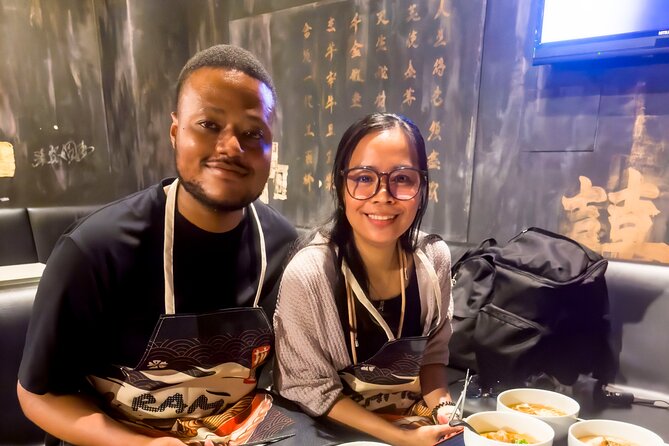
The studio is near Shibuya Station and it’s about a 10-minute walk. That matters because ramen classes can easily eat half your day in a city full of transit lines—here, you can make it part of your normal Shibuya rhythm.
You’ll start and finish at the same place, so you’re not stuck planning a second leg afterward. After the workshop, you can go back out into Shibuya right away and use the class energy as an excuse to hunt for a second snack.
The 90-Minute Flow: What You Actually Do
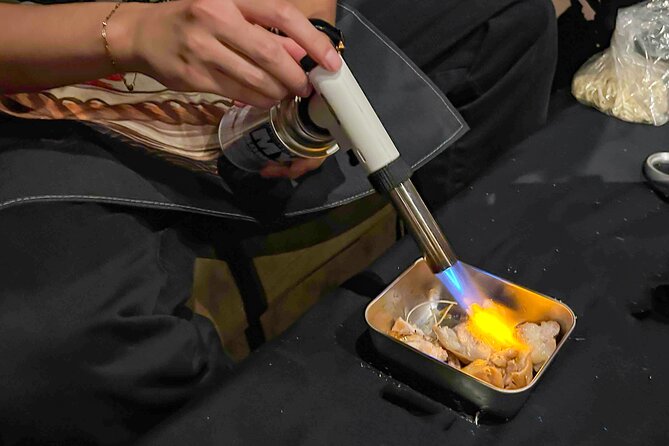
This workshop runs for 90 minutes, and the schedule is tight but not rushed. Here’s the practical breakdown, with what each segment means for you as a participant.
First comes check-in & briefing (10 minutes). This is where you learn the sequence and get your hands prepared for flour, noodles, and the equipment. Then there’s chicken chashu prep (5 minutes), which is short by design: you’re learning fast without being overwhelmed.
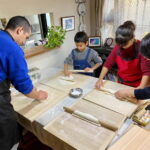
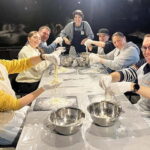
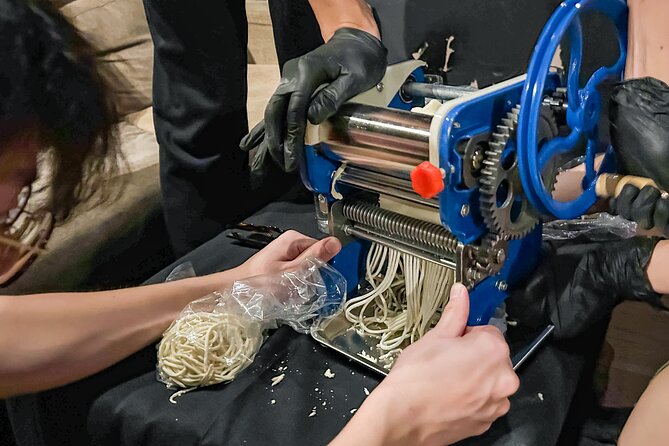
Next is noodle making (20 minutes). This is the fun, physical part. You knead, roll, and cut fresh noodles using a professional noodle machine, so the final shape is consistent enough to cook well.
Then you handle chicken chashu finishing (10 minutes). Some prep elements are handled by the studio so you don’t burn time waiting on slow steps, but you still do meaningful work with the chicken portion of the bowl.
After that you move to boiling noodles / soup preparation (10 minutes) and then plating (5 minutes). The plating isn’t just assembling—it’s where you learn how ramen should look when it’s meant to be eaten.
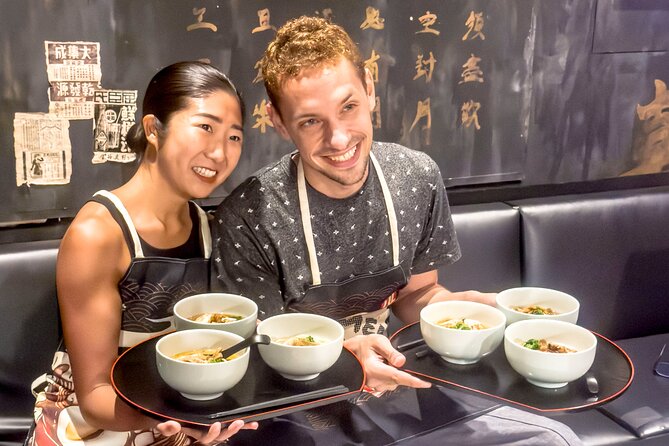
Finally, you get tasting / photo time (30 minutes). This is a big deal. You’ll eat three mini bowls of different styles, and you also get enough time to compare them calmly instead of rushing through food like it’s a food-court line.
From Flour to Noodles: The Professional Machine Advantage
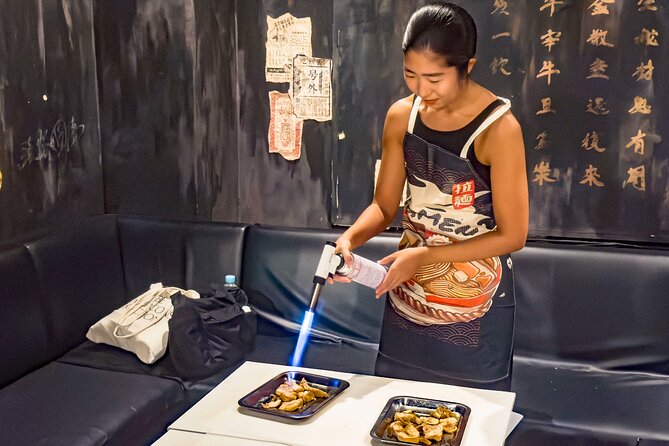
One reason this class feels worth it is the noodle-making method. You’re not only rolling dough with a hand crank and praying it comes out even. You use a professional noodle machine to knead, roll, and cut—so your noodles end up more consistent.
That consistency helps you taste differences between the broths fairly. If one batch of noodles is too thick or too uneven, it changes how a soup tastes. Here, the machine reduces that variable, especially for first-timers.
Also, aprons are provided. You might still get flour on your clothes during noodle-making—just plan for it and wear something you don’t mind lightly dusting.
Chicken Chashu + Soup Tuning: The Part People Remember
In Japan, ramen isn’t only about noodles. The chicken chashu and the broth strength shape the whole experience, and that’s why this class centers those elements.
You’ll prepare chicken chashu and then you’ll adjust the soup base to your preferred strength. That’s not a small detail. Broth strength affects saltiness, richness, and how the bowl finishes in your mouth—so your personal taste shows up in the final ramen.
The class also teaches you the difference in style across the three broths. Even if some components (like long-cook broths) are partially prepared ahead of time to keep the session running smoothly, you still get to experience the key flavor profiles by tasting everything side by side.


The Ramen Trio: Mini Bowls, Big Comparisons
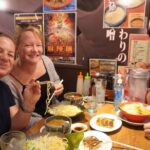
The tasting moment is the payoff: three mini bowls, each built from your work with the different broth styles. You’ll taste tonkotsu, shoyu, and miso so you can notice how fat-rich tonkotsu feels compared to shoyu’s soy-forward character, and how miso brings a deeper, slightly tangy backbone.
You’ll also add toppings. The workshop focuses on getting you comfortable assembling a ramen bowl without turning the class into a chef boot camp. The result is that you leave with a clearer sense of what makes ramen feel balanced, not just tasty.
And yes—photos are welcome. You’ll have time set aside for it, and the three-bowl lineup is basically made for your camera roll.
Price and Value: Is $64 Fair for This?
At $64 per person for a 90-minute English-guided, small-group cooking class, this lands in the mid-range for Tokyo food experiences. The reason it can feel like good value is that you’re not only eating—you’re making noodles from scratch, cooking chicken chashu, and tasting three bowls you helped assemble.
Here’s what your money is really paying for:
- Hands-on equipment time with a professional noodle machine
- Instructor guidance in English with a max group size of 8
- Ingredients and kitchen setup, handled as part of the class
- A meal-like ending: three mini bowls, not a token snack
- A digital recipe provided after class, so you can repeat the method at home
If you love food crafts but hate wasting time on demonstrations you can’t replicate, this style fits you. If your goal is just a quick meal, you may find a standard ramen shop easier on your schedule. But if you want both dinner and a skill you can use again, $64 starts looking more reasonable.
Who Should Book This (and Who Might Not)
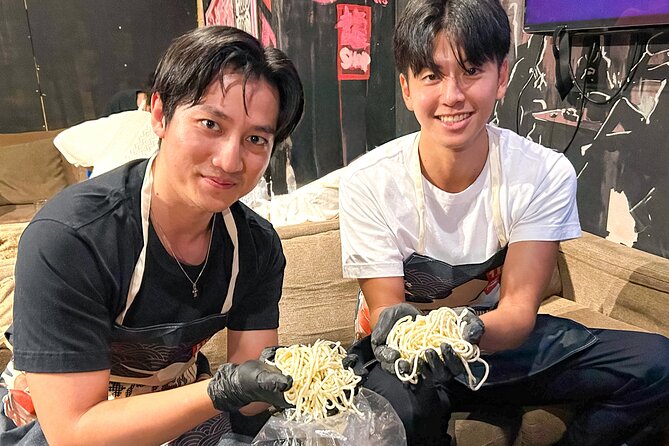
This class is beginner friendly, and it’s designed for people who want to learn without feeling lost. If you’ve never made noodles or don’t know the difference between broth styles beyond taste preference, you’ll get a clear path and lots of support.
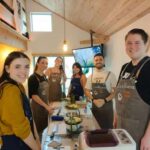
It’s also a good choice for couples and small groups because the max group size is 8. In sessions with fewer participants, you can end up with more instructor attention, which makes it easier to ask questions while you’re working.
That said, it’s not suitable if you have severe allergies to wheat/gluten, egg, or soy, or if you have celiac disease or severe airborne flour sensitivity. The class uses wheat (gluten), egg, soy, chicken, and pork, and they can’t guarantee cross-contamination prevention.
If you need strict dietary compliance beyond partial accommodations, you might be better off choosing a different kind of experience. The class may offer partial accommodation for no chicken/pork, vegetarian, or vegan, but that requires advance inquiry.
Tips So Your Ramen Turns Out Better (and Your Shirt Stays Useable)
If you want smooth noodles, treat the noodle-making steps like a rhythm, not a race. You’ll do better if you listen to the instructor’s guidance on how the dough should feel before you try to force it into the machine.
Wear comfortable clothes you don’t mind getting a light dusting of flour. The class provides aprons, but noodle-making is still messy in the real-world way.
Also, do yourself a favor and plan to arrive on time. Doors open 10 minutes before start, and there’s no waiting area for arriving earlier than that. Being late can push you into a partial session or cause refusal in some cases for safety and flow, so aim for the early end of the normal arrival window.
Finally: go in hungry. You’re making three bowls, and they’re meant to be eaten, not just tasted.
Should You Book Ramen Dojo Tokyo in Shibuya?
If you want an authentic Tokyo experience that’s hands-on, beginner friendly, and actually teaches you something repeatable at home, I’d book it. The combination of fresh noodle-making, chicken chashu, and a guided tasting of tonkotsu/shoyu/miso is a strong use of 90 minutes—and it’s conveniently located near Shibuya Station.
Skip it if you have severe allergies to wheat/gluten, egg, or soy, or if you need fully strict dietary control. And if stairs are a problem, plan around the studio being stairs only.
FAQ
Is the class taught in English?
Yes. The workshop is conducted in English (and Japanese is also used).
How long is the experience?
The class runs for 90 minutes.
What’s the maximum group size?
The group is limited to up to 8 guests.
Where is the studio located?
The studio is in Shibuya/Shinagawa area near Shibuya Station, at 1F, 2-16-29 Ohashi, Meguro-ku, Tokyo 153-0044, Japan. It’s about a 10-minute walk from Shibuya Station.
Do you make and taste tonkotsu, shoyu, and miso in the same session?
Yes. You make noodles and chicken chashu, adjust the soup base, and then taste three mini bowls in the same workshop: tonkotsu, shoyu, and miso.
Is the studio wheelchair accessible?
No. The studio has stairs only.
What allergens are used in the workshop?
The ingredients include wheat (gluten), egg, soy, chicken, and pork. Cross-contamination cannot be fully prevented.
Can you accommodate vegetarian or vegan diets?
Partial accommodation may be possible for no chicken/pork, vegetarian, and vegan, but you need to ask in advance. Strict dietary compliance beyond those categories may not be possible.
How early should I arrive?
Doors open 10 minutes before the start time. You should not arrive earlier than 10 minutes before (there’s no waiting area). Arriving 5+ minutes late may mean you join in progress or could be refused for safety and class flow.
Do I get a recipe after the class, and can I take photos?
Yes. You receive a digital recipe after the class, and photography is welcome during the experience.