REVIEW · TOKYO
Asakusa Classic Ramen & Crispy Gyoza Cooking Class
Book on Viator →Operated by 茶御飯東京 · Bookable on Viator
Ramen feels simple until you watch it made from scratch. In Asakusa with Masa and Junko, you’ll learn ramen base and toppings plus the technique for gyoza that’s juicy inside and crisp outside. Two big wins for me: the step-by-step approach to ramen broth and the hands-on method for folding gyoza so they brown properly. One heads-up: there’s some real prep work, including knife work for vegetables, so it’s not a totally hands-off activity.
You’ll spend about 3 hours in the kitchen, either 10:00 a.m. to 1:00 p.m. or 3:00 p.m. to 6:00 p.m., and then sit down to eat what you made. The best practical part is that you don’t have to bring anything—apron and utensils are provided—and you’ll leave with recipes you can actually follow at home.
In This Review
- Key Highlights You’ll Care About
- Why This Asakusa Cooking Class Feels More Local Than Typical “Food Tours”
- The 3-Hour Flow: What You’ll Do From Start to Finish
- Ramen Broth and Base: The Flavor Backbone You’ll Be Able to Recreate
- Gyoza Dough Skills: Folding by Hand for Juicy Centers and Crunchy Tops
- What You’ll Eat at the End (And Why It’s More Satisfying Than a Demo)
- Inside the Kitchen: Masa and Junko’s Teaching Style in Plain Terms
- Small Group Size (Max 8): Why It Changes the Quality of Your Class
- What’s Included: Tools, Aprons, Ingredients, and Recipes
- Price and Value: Is $167.81 Worth It?
- Logistics That Actually Matter: Timing and Meeting Point
- Who Should Book This Class, and Who Might Skip
- Should You Book This Asakusa Ramen & Crispy Gyoza Class?
- FAQ
- FAQ
- How long is the cooking class?
- What time do the classes run?
- What is the group size limit?
- Do I need to bring any cooking tools or ingredients?
- Will I get recipes to use after the class?
- Are vegetarian or vegan options available?
- What do we make in the class?
- Will I eat what I cook?
- Where does the class start?
- What is the cancellation policy?
Key Highlights You’ll Care About
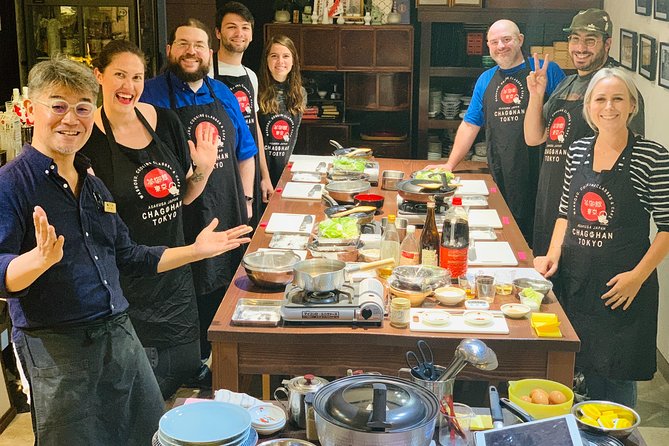
- Small-group setup (max 8): plenty of attention while you cook, not a factory line
- Ramen broth and base from scratch: not just assembly, you learn the flavor foundation
- Crispy gyoza technique: folding by hand plus guidance for that crunchy outside
- No need to bring tools: apron and utensils are provided
- MSG-free ingredients: all-natural ingredients are used, and vegetarian/vegan options exist with notice
- Recipes at the end: you get what you need to repeat the dishes later
Why This Asakusa Cooking Class Feels More Local Than Typical “Food Tours”
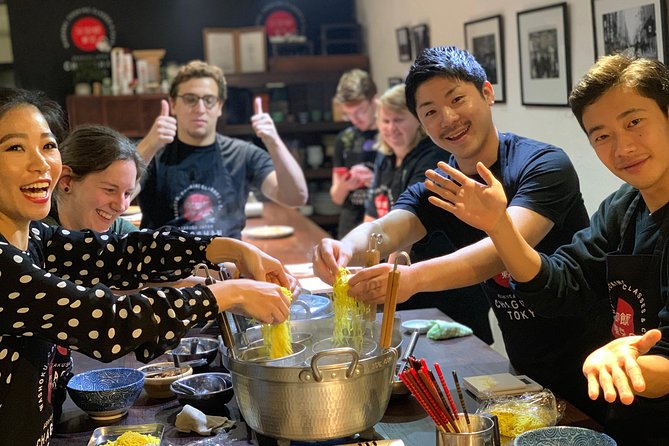
This class is built around a real working kitchen, run by a couple team that knows how ramen and gyoza should taste when they’re done right. The vibe is intimate. You’re not just watching from the sidelines—you’re doing the work, asking questions, and learning the small choices that make the food come together.
Another reason it works: it teaches two Japanese comfort foods in one sitting. You’re not spending your evening learning only one component. Instead, you’ll make a ramen base/broth and gyoza filling and dumplings, then eat the results as a full meal.
You can also read our reviews of more tours and experiences in Tokyo.



The 3-Hour Flow: What You’ll Do From Start to Finish
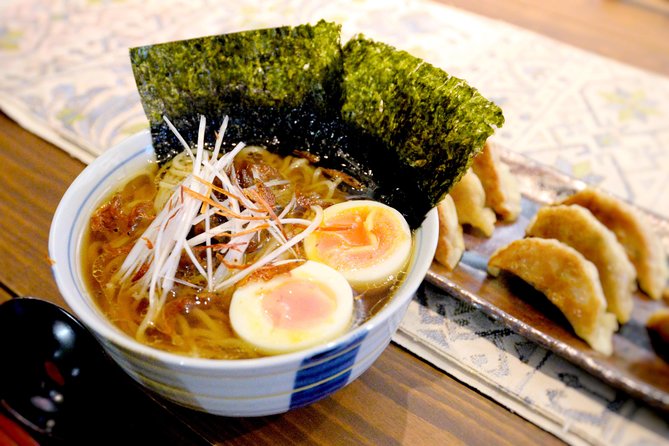
Plan on about 3 hours of hands-on cooking. The structure is simple and logical: you’ll start with the basics of the ramen components, shift to gyoza prep and folding, and then finish by assembling and eating your bowl.
In practice, that means you’re working in stages:
- Ramen prep: making ramen base and broth from scratch, plus preparing toppings
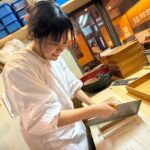
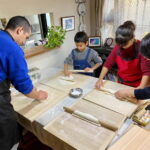
- Gyoza prep: making the filling, cutting vegetables by hand, and folding the dumplings
- Finish and eat: assemble a bowl of ramen and enjoy the gyoza you made
Because it’s a small-group class, you don’t feel rushed. You can keep up even if you’re a beginner, as long as you’re willing to do some chopping and follow directions.
Ramen Broth and Base: The Flavor Backbone You’ll Be Able to Recreate
Ramen people know this already: the broth is the whole story. This class focuses on getting that base right, including how to prepare the ramen base and broth from scratch rather than relying on shortcuts.
You’ll also work on toppings. That matters because ramen isn’t just a bowl of noodles. The toppings are part of the balance—texture, temperature, and timing. When you learn the broth approach alongside topping prep, your later attempts at home feel more like ramen and less like guesswork.
One useful consideration: shoyu-style broth takes multiple steps. Even in a class setting, you’ll see that it’s not instant. The payoff is that you’re learning a process, not memorizing one flavor hack. The recipe you receive afterward is meant to help you repeat that approach at home.
Gyoza Dough Skills: Folding by Hand for Juicy Centers and Crunchy Tops
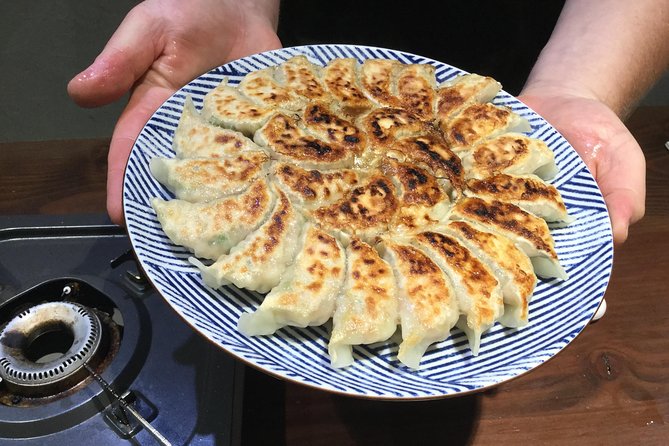
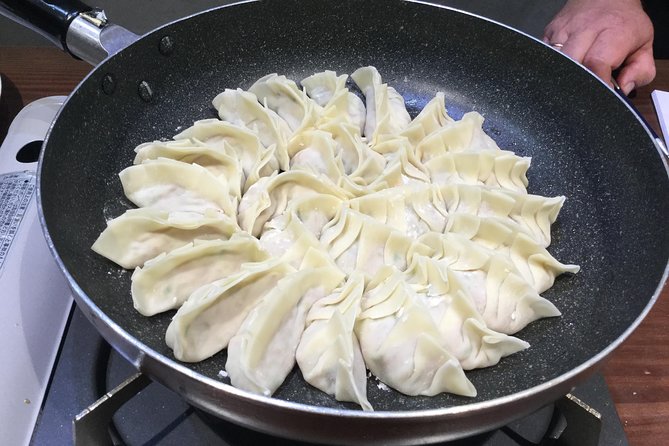
Gyoza is where most people think they’re “mostly there” until they try to get the texture right. This class teaches the filling and the folding method so the dumplings cook up with a juicy inside and a crisp outside.
A key part is the vegetable work. You’ll practice vegetable cutting techniques for the filling. That’s good training because gyoza filling isn’t just about taste—it’s also about how ingredients cook through.
Then comes the folding. Doing it by hand (with guidance) helps you understand how the wrapper folds should look and feel. When you can fold consistently, the dumplings cook more evenly and you avoid that soggy middle problem.
What You’ll Eat at the End (And Why It’s More Satisfying Than a Demo)
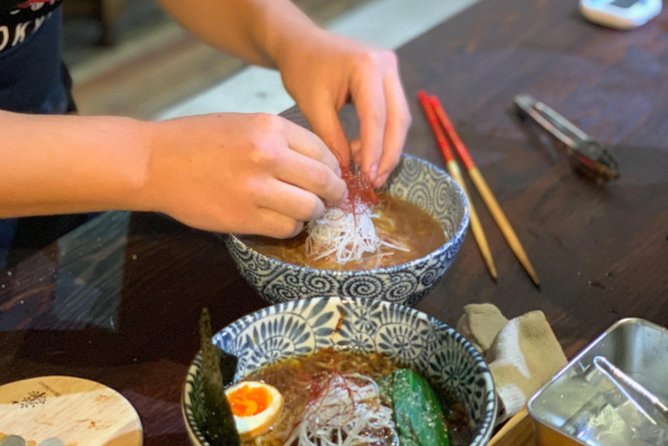
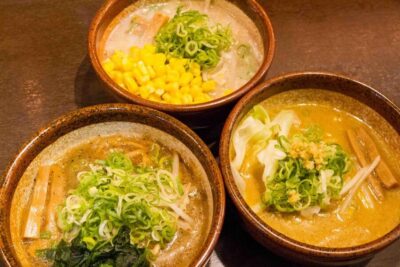
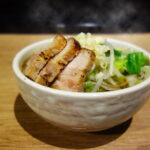
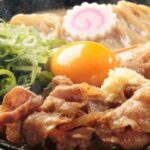
At the end of class, you assemble a photogenic bowl of ramen and sit down to enjoy what you prepared. This isn’t a drop-in-and-leave situation. The meal is part of the learning loop.
From the format of the class, you should expect a full portion of ramen plus a batch of gyoza made during your session. In past sessions, students have reported ending up with around 8 gyoza and a full bowl of chicken ramen, though the exact ramen style can vary based on the course setup. Either way, you’re not leaving hungry.
The big value here is feedback. You’ll taste what the broth and gyoza technique create together. That makes it easier to replicate later because you understand what success tastes like, not just what ingredients to buy.


Inside the Kitchen: Masa and Junko’s Teaching Style in Plain Terms
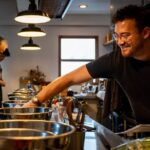
This is a couple-run class, and it shows in how organized it feels. Masa leads the cooking instruction and also brings in the history and culture around ramen and Japanese cuisine. Junko helps with photos and videos during the experience, so you don’t have to keep stopping what you’re doing to document things.
Language is not a stress point. The instruction is delivered in clear, student-friendly English, and the pacing is meant to work for both complete beginners and more experienced home cooks in the group.
What I like about this teaching style is that it keeps you from feeling lost. You’re not just handed a recipe and told good luck. You’re guided step-by-step, with room to ask questions while you cook.
Small Group Size (Max 8): Why It Changes the Quality of Your Class
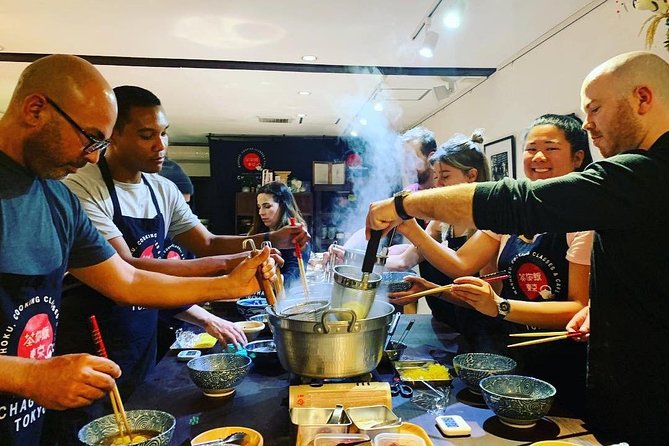
A max group size of 8 can sound like a marketing line, but in a cooking class it matters. With a larger group, you end up waiting, watching, and hoping your step gets acknowledged.
Here, you’re more likely to:
- stay engaged during each cooking stage
- get corrections while you’re still working (that’s when it counts)
- ask questions without feeling like you’re slowing everyone down
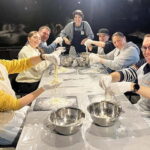
It also helps that the class is designed for families, couples, friends, and even team-building. If you’re traveling with others, it’s one of those experiences where everyone can participate instead of splitting into “cooks” and “sitters.”
What’s Included: Tools, Aprons, Ingredients, and Recipes
This class is unusually practical about what’s provided. You don’t need to bring anything. Apron and utensils are provided, and all natural ingredients are used.
Two inclusion details you’ll be glad about:
- No MSG or artificial additives: the ingredients are described as all-natural, so you’re learning a taste profile built from real components
- Recipes to take home: you get instructions you can use to recreate the dishes later (including digital copies)
If you have dietary preferences, vegetarian and vegan options are available with advance notice. That’s important, because gyoza and ramen can get tricky when people assume “no meat” means “no flavor.” This class specifically notes options are possible.
Price and Value: Is $167.81 Worth It?
$167.81 per person is not a bargain. But it can be good value, depending on what you care about.
Here’s what you’re really paying for:
- a hands-on lesson that covers both ramen and gyoza
- ingredient prep and cooking time (not just a tasting)
- equipment provided (apron and utensils)
- a meal at the end
- recipes so you can repeat it after your trip
If you love ramen and gyoza, this price starts to look less like “paying for dinner” and more like “paying for skills.” The best cooking classes give you repeatable results, not just a one-night meal. Getting ramen broth from scratch plus a practical gyoza technique is exactly the type of knowledge you can use again.
Also, the class is often booked about 27 days in advance on average. That’s a sign it’s not a last-minute fallback. If you’re serious about it, plan ahead.
Logistics That Actually Matter: Timing and Meeting Point
You’ll have two class windows:
- Morning: 10:00 a.m. to 1:00 p.m.
- Afternoon: 3:00 p.m. to 6:00 p.m.
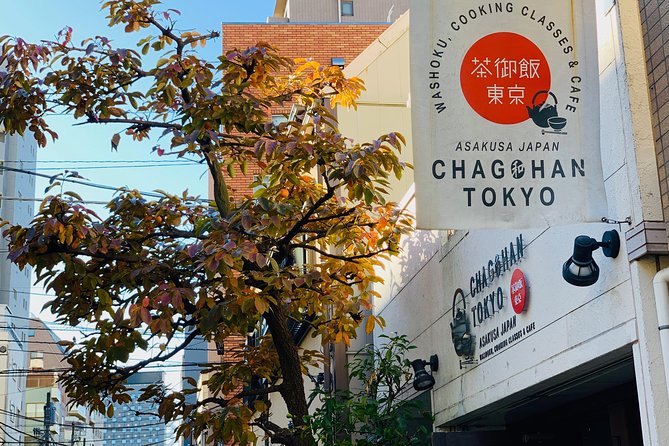
The meeting point is at 茶御飯東京 (Chagohan Tokyo), Taito City, Nishiasakusa, 2-chōme 17-13, 1F. It’s near public transportation, which keeps things simple on the Tokyo side of your day.
My practical advice: arrive a little early and wear comfortable clothes you don’t mind getting food on. Cooking involves real prep, and you’ll be moving around during broth and dumpling work.
Who Should Book This Class, and Who Might Skip
This class fits you if:
- you’re a ramen and gyoza fan and want more than a bowl and a photo
- you want a small-group experience with a real teacher-couple team
- you like learning processes you can repeat at home (broth method and gyoza technique)
- you’re traveling with a group where everyone can participate
You might consider skipping if:
- you want zero knife work and no prep tasks (vegetable cutting is part of the process)
- you’re very short on time and can’t dedicate about 3 hours to hands-on cooking
- you dislike learning a multi-step broth process; it’s not a one-step recipe lesson
Should You Book This Asakusa Ramen & Crispy Gyoza Class?
Yes—if you want a Tokyo experience that gives you skills, not just a meal. The combination of ramen broth from scratch plus crispy gyoza folding is exactly the kind of “do it yourself” cooking class that pays off later when you’re back home.
Book it especially if you enjoy learning the why behind the taste. Masa and Junko make it feel organized and friendly, with clear teaching and recipes you can actually use. Just go in ready to cook, not just watch.
FAQ
FAQ
How long is the cooking class?
The class is about 3 hours.
What time do the classes run?
There are two options: 10:00 a.m. to 1:00 p.m., or 3:00 p.m. to 6:00 p.m.
What is the group size limit?
The class has a maximum of 8 travelers.
Do I need to bring any cooking tools or ingredients?
No. An apron and utensils are provided, and the class provides the natural ingredients.
Will I get recipes to use after the class?
Yes. You receive recipes so you can recreate the dishes at home.
Are vegetarian or vegan options available?
Vegetarian and vegan options are available with advance notice.
What do we make in the class?
You’ll make ramen broth and base from scratch (including toppings) and prepare gyoza filling and fold crispy gyoza by hand.
Will I eat what I cook?
Yes. At the end, you sit down and enjoy the ramen and gyoza you prepared.
Where does the class start?
The meeting point is 茶御飯東京 (Chagohan Tokyo), Taito City, Nishiasakusa, 2-chōme 17-13, 1F.
What is the cancellation policy?
This experience is non-refundable and cannot be changed once booked. If it’s canceled due to poor weather, you’ll be offered a different date or a full refund. If the minimum traveler requirement isn’t met, you’ll also be offered a different date/experience or a full refund.