REVIEW · OSAKA
Osaka: Cooking Class Ramen & Gyoza Course in Nanba
Book on GetYourGuide →Operated by 株式会社XLSWORLD · Bookable on GetYourGuide
Ramen from scratch, in two hours. This Osaka cooking class turns traditional ramen and gyoza into a do-it-yourself meal, led in English and Japanese by local chefs. You cook in a small group (up to 8), then sit down and eat what you made with drinks like sake and beer.
I especially like two things: you learn the hands-on technique (including making ramen noodles from scratch and getting gyoza folds right), and you leave with take-home recipes so the class doesn’t end after dinner. The tasting portion also includes sake, beer, and soft drinks, which makes the whole evening feel like a real plan—not just a cooking demo.
One consideration: the class is held in an apartment-building kitchen, and there’s no hotel pickup, so you’ll want to plan your own way to the meeting point and allow a little extra time to find Room 303.
In This Review
- Key things to know before you go
- Why This Osaka Ramen & Gyoza Class Feels Like a Local Evening
- The 2-Hour Flow: Prep, Cook, Then Taste (With Sake and Beer)
- Ramen Workshop: Making Noodles From Scratch (and Why It Matters)
- Gyoza Folding and Cooking: Getting Past the Awkward First Fold
- Your Tasting Session: Turning Practice Into a Meal With Drinks
- Meeting Point in Osaka: Dear Court Semba, Room 303 (How Not to Stress)
- Price and Value: Is $70 for Ramen and Gyoza Fair?
- Who Should Book This Class (and Who Might Prefer Something Else)
- Should You Book This Ramen & Gyoza Class in Osaka?
- FAQ
- How long is the Osaka ramen and gyoza cooking class?
- What’s included in the price?
- Is hotel pickup and drop-off included?
- What languages are the instructors?
- Is the class suitable for beginners?
- Do I need to book in advance?
- What should I do if I have trouble finding the meeting point?
- Is the venue wheelchair accessible?
Key things to know before you go
- Small group (up to 8) means you get more attention while you chop, mix, and fold.
- Ramen noodles from scratch plus gyoza folding practice—skill building, not just eating.
- Chef-led in English/Japanese with friendly, step-by-step guidance.
- 1-hour tasting with drinks (sake, beer, soft drinks) after cooking.
- Recipes to take home, so you can recreate the meal later.
Why This Osaka Ramen & Gyoza Class Feels Like a Local Evening
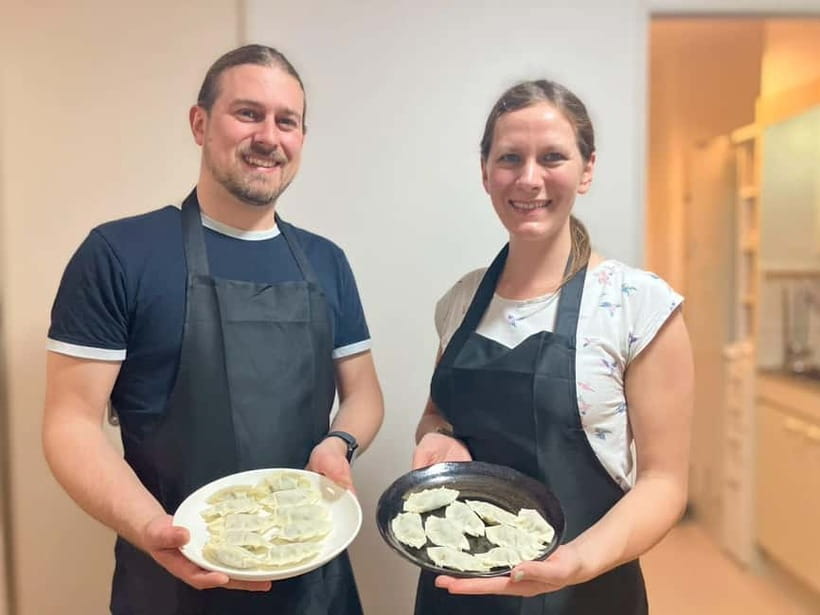
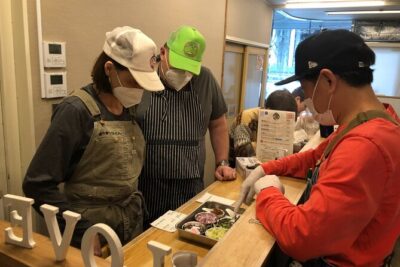
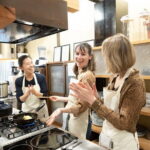
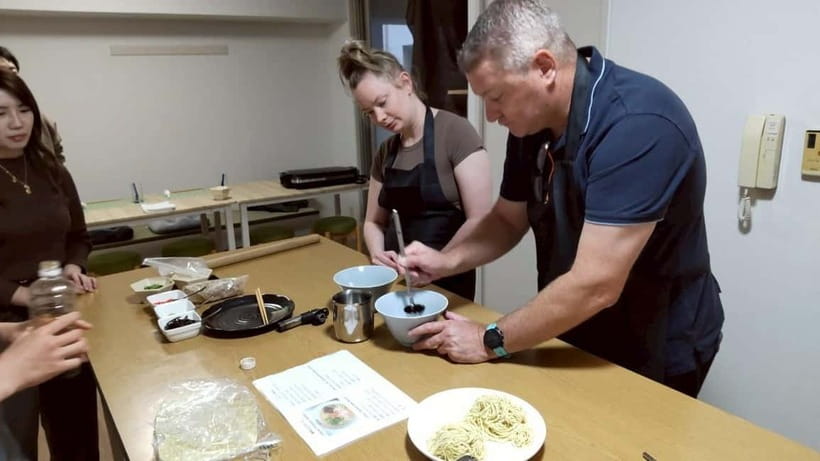
If you’re tired of tours that point and rush, this one slows down on purpose. The setting is a working-style cooking space, and the pace is built for questions. You’re not just watching; you’re doing—chopping vegetables, handling ingredients, and getting guided through the steps at your station.
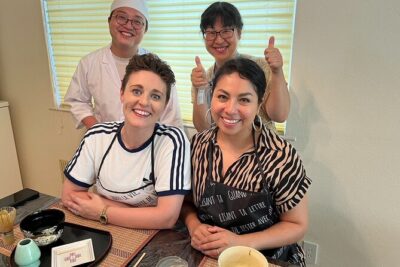
A big part of the vibe is the teaching team. Past classes have had hosts such as Nana and Yuriko, and others like Ryota and Saya, plus Keiichi, Mimi, Yuma, and Kiho. The pattern is consistent: instructors stay close, correct gently, and explain what you’re doing and why it matters. Multiple people noted that it felt more like cooking with friends than attending a formal lesson, and you can see why—small group, lots of interaction, and a shared goal: finish dinner together.
The other reason it feels local is the focus. Ramen and gyoza are everyday comfort foods in Japan, but making them well takes technique. This class puts technique in your hands—especially the noodle work and the dumpling folds—so you go home with muscle memory, not just flavor memories.
You can also read our reviews of more tours and experiences in Osaka.

The 2-Hour Flow: Prep, Cook, Then Taste (With Sake and Beer)
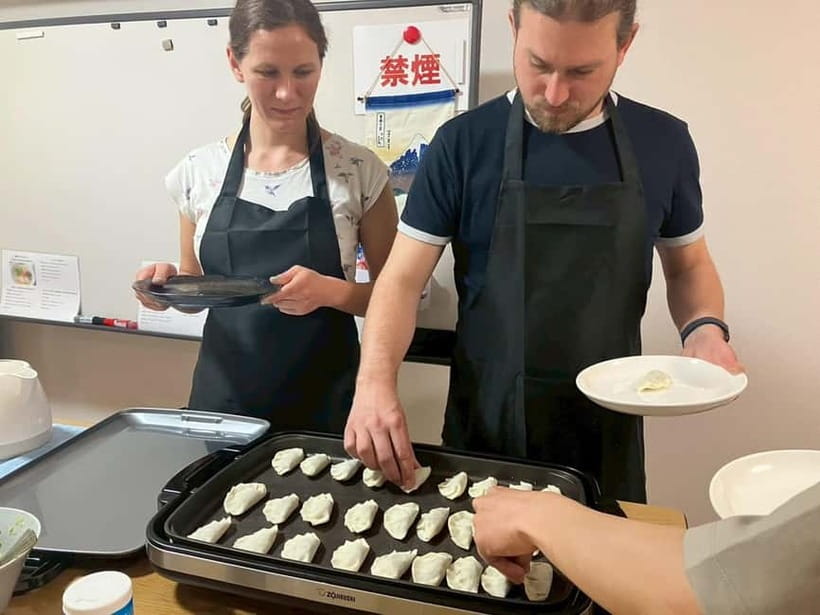
The schedule is simple, and that’s a good thing when you’re in Japan and don’t want a complicated day.
- 30-minute orientation and prep: You start with a run-through and prep time so you’re not confused once the cooking begins.
- 1.5 hours hands-on cooking: This is the work portion—making the ramen noodles and preparing the gyoza, with instructors guiding each step.
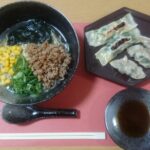
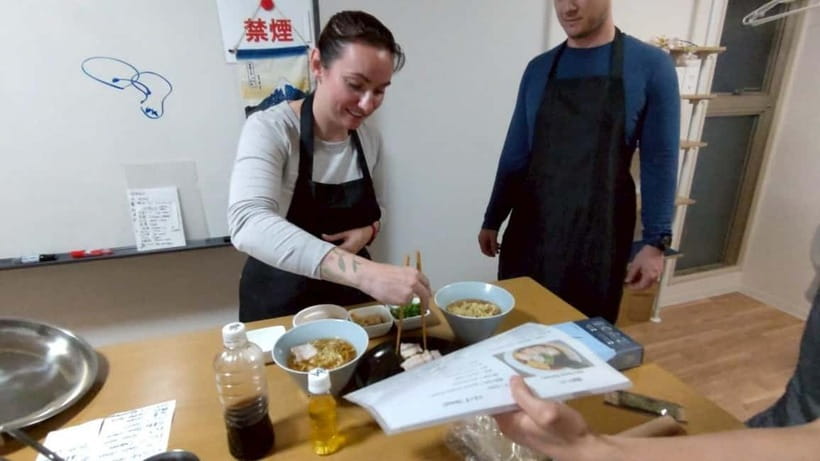
- 1-hour tasting session: After cooking, you sit down to eat the ramen and gyoza you made. Drinks included are sake, beer, and soft drinks.
That last part is more than a perk. When you learn Japanese cooking, the easiest trap is to treat it like a “class.” The tasting turns it into a meal with payoff. You get to taste your own ramen and gyoza while the instructions are still fresh in your head—so later, when you cook at home, you remember what you were aiming for.
Also, because it’s a small group, you’re not waiting around endlessly. You might take turns on certain tasks, but you should stay involved through the cooking phase.
Ramen Workshop: Making Noodles From Scratch (and Why It Matters)
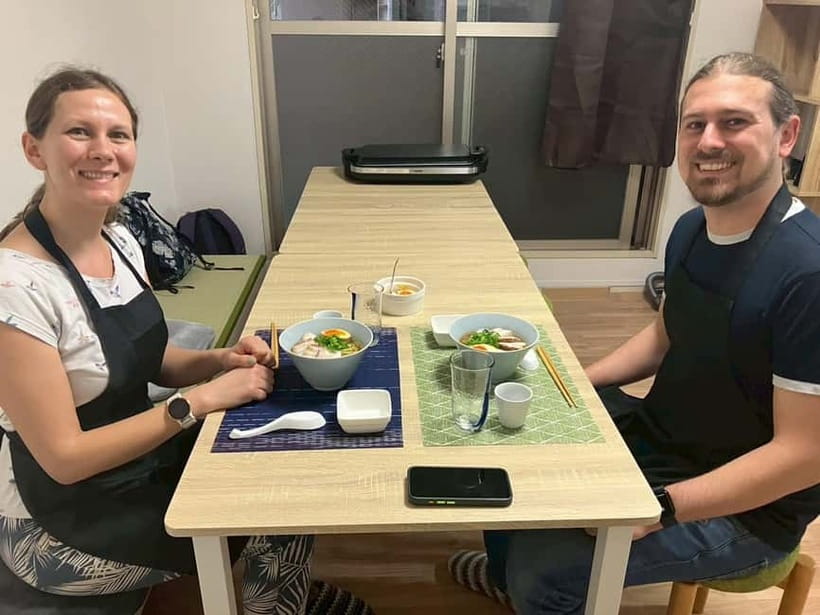
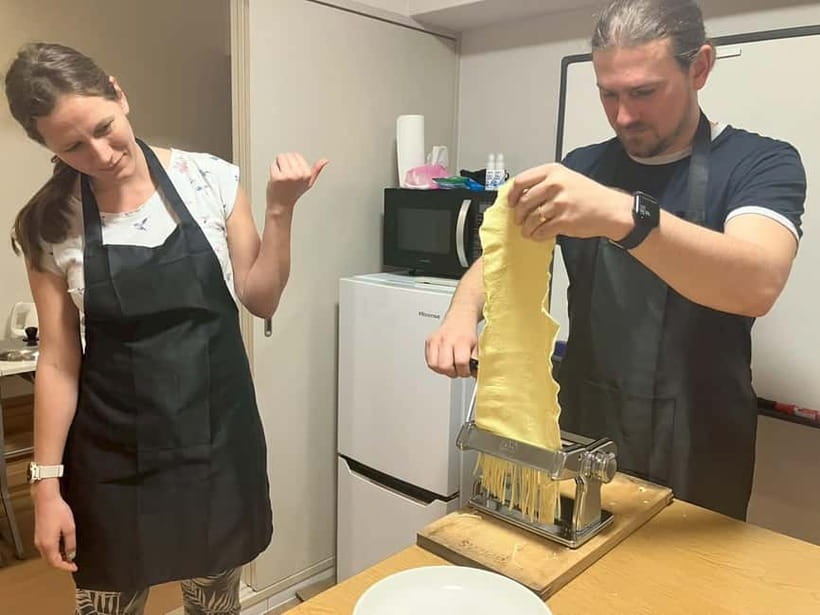
Ramen at home can be intimidating, mostly because people think the noodles are the hardest part. This class tackles that directly. You’ll learn how to make traditional ramen with a clear focus on process—people specifically mentioned working with the flour and making noodles from scratch.
What you’ll likely take away isn’t only the recipe name. It’s technique: how the dough feels as it’s handled, how you work the noodles, and how the steps connect to a better result. Multiple participants highlighted that the instructors were patient and detailed, including teaching in a way that beginners could follow in English.
If you’re the kind of person who orders ramen in Osaka, you’ll love this part because it connects street-food flavor to kitchen technique. If you’re a home cook already, you’ll probably appreciate the structure too—there’s a difference between a cooking video and being guided while your hands try the method.
One practical note: some ingredients are described as authentic but not always easy to find at home. That’s normal for Japanese cooking. The class helps by giving you the steps and the recipe cards, so even if you can’t match every ingredient perfectly, you can still recreate the style and approach.
Gyoza Folding and Cooking: Getting Past the Awkward First Fold
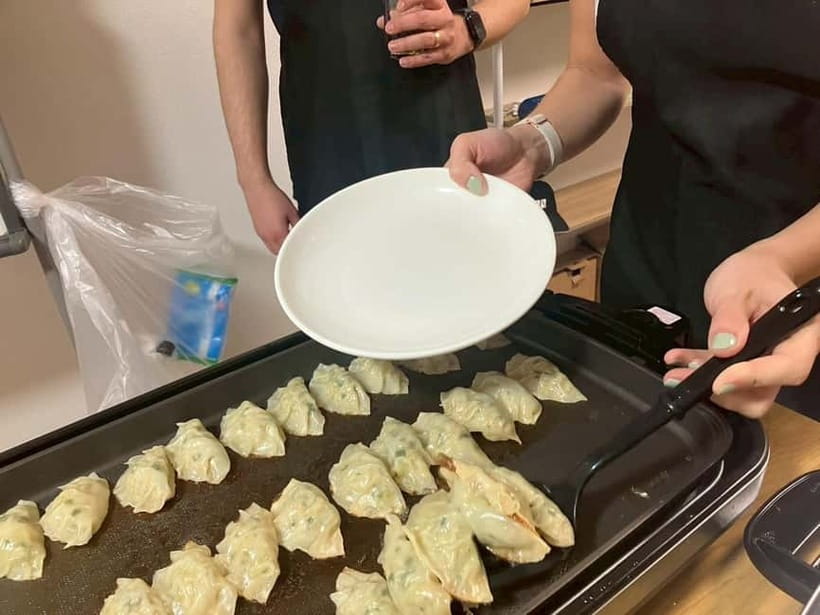
Gyoza looks simple until you try folding it. The edges are where the character lives. In this class, instructors spend real time on dumpling technique, and people called out the intricate detail of folding and the skill of the gyoza team—especially mentions of hosts like Mimi and Keiichi, where the folding was described as incredible and the teaching as patient.
Expect a true hands-on dumpling session. You’ll work with vegetables and pork as part of the traditional gyoza course, and you’ll build the dumpling shape through guided repetition. Even if your folds aren’t perfect on the first try, you’ll leave understanding what a good fold looks like and how to correct it.
Also, this experience works well for different comfort levels. The class is described as suitable for beginners, and multiple guests said they felt involved the whole time. That matters because gyoza folding can be frustrating if an instructor throws you into it without support. Here, the support is a core feature.
Diet notes worth knowing: at least one participant reported vegan accommodation, and others noted vegetarian options too. The class clearly has enough flexibility to handle non-meat needs, but you should plan to mention dietary requirements when you book so the team can prepare appropriately.
Your Tasting Session: Turning Practice Into a Meal With Drinks
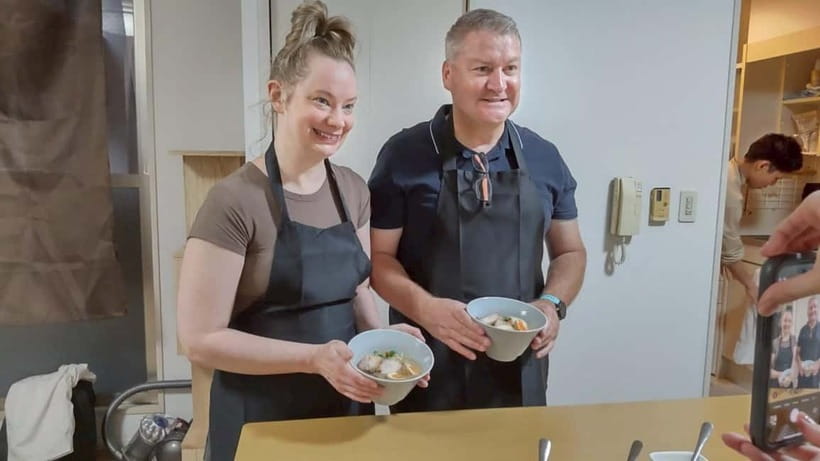
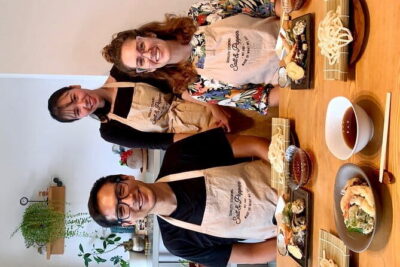
After the cooking, you get to enjoy the ramen and gyoza you made. The tasting session lasts 1 hour, and drinks included are sake, beer, and soft drinks.
This part is where you confirm whether the technique worked. When you’re watching the process, everything feels logical. When you taste, you realize which step influenced the final texture and flavor. That feedback loop is why cooking classes beat restaurant-only food days if your goal is to learn.
People also described the results as some of the best ramen they had in Japan, which makes sense: ramen noodles and gyoza dumplings are both texture-driven. If the dough and folding were right, the food tastes right immediately.
One small consideration: not every class-style meal is set up for a full, long chat with the chefs at the table. Some participants said they would have liked to dine together with staff more. So if you’re hoping for a long, chef-led conversation while you eat, you might want to be the one who asks questions during the cooking portion, when instructors are right there.



Meeting Point in Osaka: Dear Court Semba, Room 303 (How Not to Stress)
Logistics can make or break an evening like this, and this one is straightforward once you know what to do.
The meeting point is:
Dear Court Semba 303
4-chōme-3-1 Bakurōmachi, Chuo Ward, Osaka 541-0059, Japan
From the entrance, there’s a doorbell panel. Press 303, then press the button labeled 呼. Once the door opens, take the stairs or elevator to Room 303 on the 3rd floor.
What helps: this is an apartment-building type location. One participant gave a helpful landmark description: the building can be tucked behind a Ferrari dealership, past a big stairway to a gym, with an outdoor lounge area and couches. That kind of visual cue is exactly what you want in Osaka, where buildings can look similar.
So here’s the practical advice: arrive a few minutes early, take a screenshot of the address, and use the call/message option if you get stuck. You’ll keep your evening relaxed.
Price and Value: Is $70 for Ramen and Gyoza Fair?
$70 per person sounds steep until you break down what you’re actually paying for.
You’re getting:
- All ingredients and tools (so you’re not doing last-minute grocery work)
- Expert guidance from Washoku professionals
- 1.5 hours of hands-on cooking
- 30 minutes of prep/orientation
- A 1-hour tasting session
- Drinks included (sake, beer, soft drinks)
- Recipes to take home
For a city like Osaka, the value here is the skill time. You’re not paying for a meal only. You’re paying for a guided session that teaches technique and gives you the tools to repeat it later.
The “take-home recipe” piece is also part of the value equation. A lot of food experiences give you memories. This one gives you a kitchen plan, which turns your Osaka trip into something you can practice on a rainy night at home.
Also, group size matters for cost. Up to 8 participants means you’re not swallowed by a crowd. If you’ve ever done big group cooking where you barely get close to the station, you’ll appreciate the tighter setup here.
You might not get the same value if you only want to eat and hate cooking. But if you enjoy learning, even a little, the price lands closer to “reasonable” than “too much.”
Who Should Book This Class (and Who Might Prefer Something Else)
This class is a strong fit if you want:
- A hands-on Osaka ramen experience rather than a sit-down food tour
- Beginner-friendly cooking guidance
- A small group evening that includes a real meal at the end
- A souvenir that isn’t only photos: recipe cards you can actually use
It also works well for couples, solo travelers, and families. One review described it as a family outing spanning ages from a 16-year-old to adults, which tells you the class doesn’t feel locked to one age group.
Skip or reconsider if:
- You don’t want to cook at all and prefer only tasting
- You need hotel pickup (this class doesn’t include it)
- You’re short on time and can’t handle a meeting point that’s in an apartment building
If you’re based around Namba and Semba, you’ll likely find it easy to reach using local transit or a short taxi ride, but you still need to plan your own arrival.
Should You Book This Ramen & Gyoza Class in Osaka?
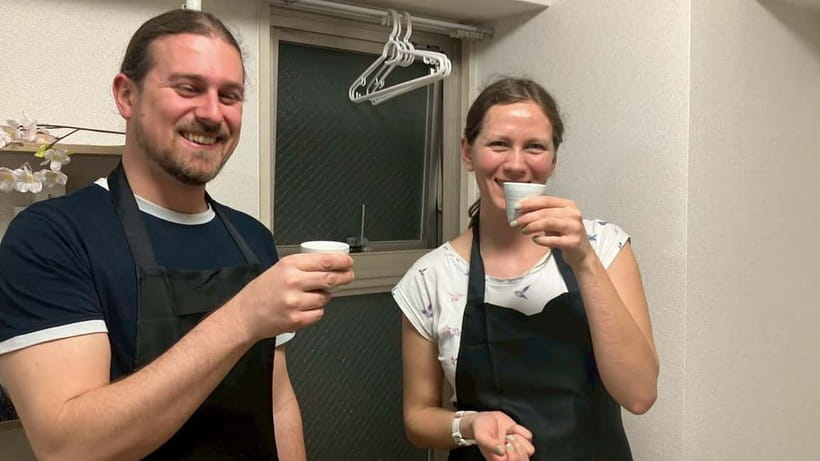
Yes—if you like learning and you want a meal with real technique behind it. The best reasons to book are simple: hands-on noodle making, dumpling folding practice, and a tasting session with drinks, all in a small group with English/Japanese support.
If you’re on the fence, ask yourself one question: do you want to leave knowing how to make ramen and gyoza, not just tasting them? If the answer is yes, this is the kind of activity that turns an evening into a skill.
One more practical reminder: the class requires booking ahead, and it’s run by 株式会社XLSWORLD. Spots are limited to a small group size, so if your Osaka dates are firm, lock it in early.
FAQ
How long is the Osaka ramen and gyoza cooking class?
The class runs for 2 hours total.
What’s included in the price?
All ingredients and tools, expert guidance, 1.5 hours of hands-on cooking, a 30-minute orientation and preparation session, a 1-hour tasting with drinks (sake, beer, soft drinks), and recipes to take home.
Is hotel pickup and drop-off included?
No, hotel pickup and drop-off are not included.
What languages are the instructors?
Instruction is available in English and Japanese.
Is the class suitable for beginners?
Yes, it’s suitable for beginners and food enthusiasts.
Do I need to book in advance?
Yes. Booking is essential, and you’re advised to book at least one day in advance.
What should I do if I have trouble finding the meeting point?
The meeting instructions include pressing 303 and the 呼 button at the doorbell panel, and you can call or message if you have trouble finding Room 303.
Is the venue wheelchair accessible?
Yes, the activity is wheelchair accessible.