REVIEW · TOKYO
Tokyo Shibuya: Japan Only Limited Ramen – Select from 9 Types
Book on Viator →Operated by Fuji Tour · Bookable on Viator
Three ramen bowls, one Shibuya morning. You start at the world’s busiest pedestrian crossing, then hit three beloved shops for half-sized ramen with Sakurako guiding the noodle talk. I love that the portions are small enough to taste widely, and that each stop feels like a lesson in how ramen is built and why it matters. The one thing to plan for: this is mostly on foot, so if mobility is an issue you’ll likely need to budget for a taxi at your own expense.
This tour keeps you moving for about 2 to 3 hours, in a small group (up to 10 people) with a mobile ticket and group discounts. You’ll also choose your bowl at each shop, picking one half-sized ramen from multiple options—so you’re not stuck eating something that isn’t your style.
In This Review
- Key highlights to know before you go
- Shibuya Crossing sets the tone for your ramen mission
- Half-sized ramen bowls: the smartest way to eat more in 2–3 hours
- What the guide teaches you between slurps
- Stop 1 in Shibuya: thick, hearty ramen you can feel
- Stop 2 in Shibuya: health-conscious ramen that still tastes real
- Stop 3 in Shibuya: the final shop picked for your tastes
- Walking, timing, and group size: how this tour keeps it smooth
- Price and value: is $50 a good deal for ramen in Shibuya?
- Practical tips so your order goes smoothly
- Who should book this Shibuya ramen crawl
- Should you book this ramen tour in Shibuya?
- FAQ
- What’s included in the Tokyo Shibuya ramen tour?
- How long is the tour?
- Where does the tour meet and end?
- Do I need cash for anything?
- Will I choose what I eat?
- Is there a limit on group size?
- Can I cancel for a refund?
Key highlights to know before you go
- Shibuya Crossing photo stop first so you’re oriented in Tokyo before you start eating
- Three shops, three half-bowls lets you compare ramen types without feeling stuffed
- Pick your bowl at each shop from different noodle and topping options
- Ramen explanations included so you know what you’re tasting (and why)
- Small group of up to 10 people keeps the experience friendly and question-friendly
- Extra orders need cash so come prepared if you want dumplings or more
Shibuya Crossing sets the tone for your ramen mission
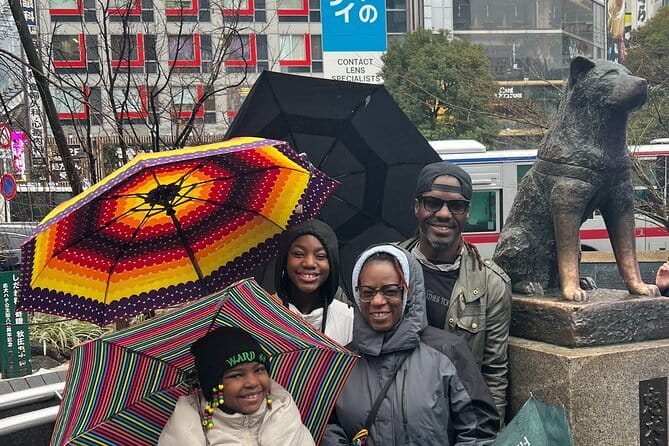
Before your first chopsticks touch noodles, you’ll be at Shibuya’s most famous street-crossing scene, the kind of place where people stream in every direction and somehow it still looks orderly. It’s a great way to wake up your senses in Tokyo: you get the landmark energy, you snap the classic photos, and you get your bearings before the food part.
What I like about starting here is the mental shift. You’re not jumping straight from a train station into a restaurant line. You get a clear point in the day, a sense of where you are, and a quick reminder that Shibuya is a character all on its own.
You’re also walking—so even if you’re not trying to sightsee for hours, you’ll feel like you’ve done something real in Tokyo beyond eating.
You can also read our reviews of more tours and experiences in Tokyo.



Half-sized ramen bowls: the smartest way to eat more in 2–3 hours
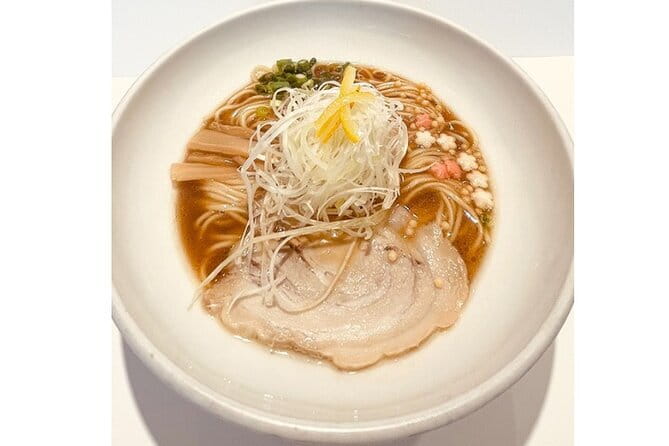
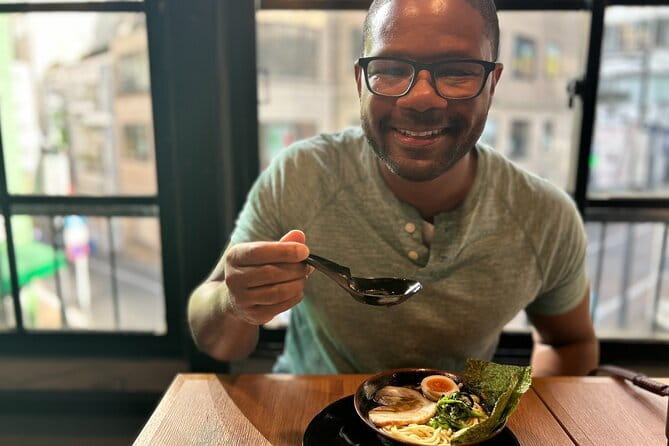
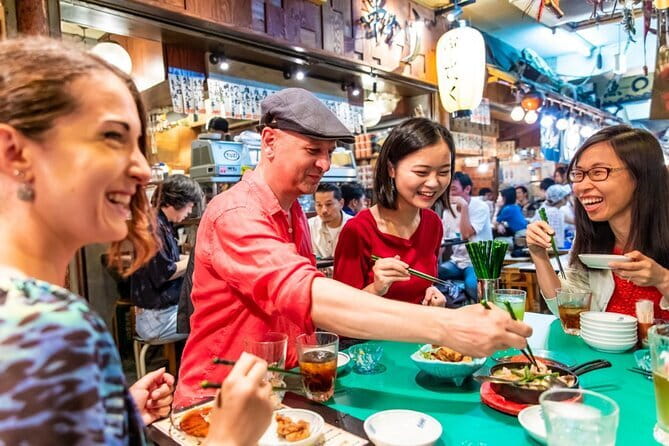
The whole idea is simple: instead of one big ramen meal, you taste several kinds of ramen in small bowls. At each of the three ramen stops, you choose one half-sized ramen from the options available at that shop. By the end, you’ll have three half-sized bowls—three chances to compare broth, noodle texture, and topping style.
This is the part that makes the tour good value for people who like variety. One full bowl can be great, but you’re locked in. Here, you’re building a mini ramen flight: thicker and heavier styles at one stop, a more health-conscious direction at another, and then a final recommended shop tailored to the group’s tastes.
A key detail to know up front: all ramen broths include chicken, pork, or fish. That matters if you avoid certain meats or follow a strict dietary rule. If you’re not sure, ask the guide on the spot, but don’t count on vegetarian options being part of the plan.
And because the bowls are half-sized, you’ll have enough room to keep enjoying the experience rather than just pushing food around your plate.
What the guide teaches you between slurps
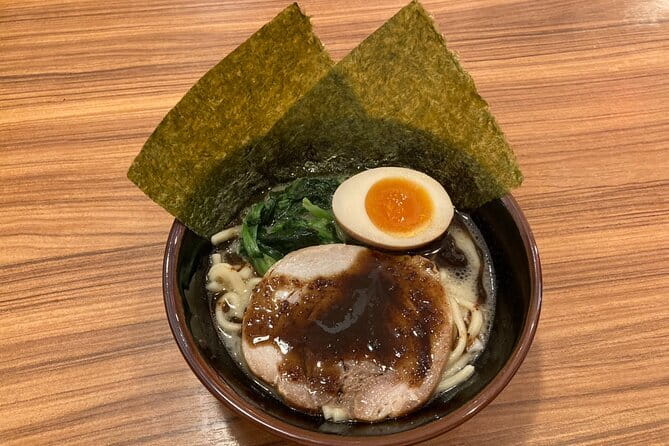
A big reason this works is the explanation layer. The guide brings a way to make sense of what you’re ordering, including how different ramen styles are cooked and assembled. You’re not just told what’s in the bowl—you learn how the broth and noodles are treated and how that changes the feel.
In one highlight from past guests, the guide used a laminated presentation showing different flavors, toppings, and noodle styles. That kind of visual support is handy in Japan, where menus can be hard to read fast. It also means you can ask questions without slowing everything down.
Sakurako also adds cultural context alongside ramen talk, plus local tips you can use after the tour. I like that angle because it turns ramen from a single “activity” into a way to understand everyday Japanese food habits: timing, ordering cues, and what locals pay attention to when they pick a shop.
You’ll get recommendations based on your tastes, which is useful if you know you prefer certain broth styles or noodle textures.
Stop 1 in Shibuya: thick, hearty ramen you can feel
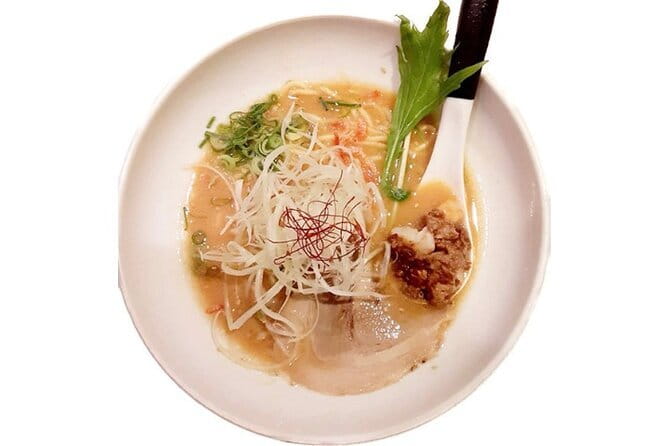
Your first ramen shop is aimed at the kind of bowl many people crave after walking around: rich and thick ramen paired with thick noodles. This is the heavier style, where the broth clings a bit more and the noodles have that chewy, satisfying bite.
Why this stop works early in the tour: it gives you a baseline. After your crossing stop, you’ve probably built some appetite. Starting with a hearty bowl helps you notice the textures clearly, before you move to different directions later.
Also, the selection setup matters. Even though it’s one shop, you can choose from multiple ramen options at that stop. So you’re not stuck with a single “tour choice.” If you want extra broth depth or a specific noodle feel, this is where you steer.
What to watch for: Since broths include chicken, pork, or fish, keep your preferences in mind if you’re sensitive to certain flavors.
Stop 2 in Shibuya: health-conscious ramen that still tastes real

The second ramen shop shifts gears. You’ll be eating something positioned as health-conscious ramen—nutritious, flavorful, and made with your well-being in mind. You’ll still get the ramen experience, just with a different angle.
I like this stop because it prevents the classic food-tour problem: three stops that all taste almost the same. Here, the tour design intentionally changes the direction of the bowl. You’re comparing how cooking style affects flavor depth, mouthfeel, and how you feel after you finish.
You choose a half-sized ramen here too, so you keep control over what you’re eating. It’s a small but important detail. It turns the tour into a tasting, not a forced meal.
And because you’re learning as you go, you’ll probably start noticing differences faster than you expected—how the broth looks, how it coats the noodles, and how toppings change the balance.



Stop 3 in Shibuya: the final shop picked for your tastes
The last stop is the payoff: a handpicked recommended shop chosen just for you. This is where the guide’s job becomes more personal. If you asked questions at the earlier shops, or if you clearly enjoyed one style more than another, your final bowl should land closer to your preferences.
This stop is important because it’s not just about quantity. It’s about ending on the bowl that feels most “you.” That makes the tour memorable in a different way than a simple check-the-box food crawl.
At this point, you’ve already tasted thick, then lighter/health-forward, and now you get a wrap-up choice that ties the whole experience together. I find that by the third bowl, you’re not only tasting—you’re judging. That’s where the explanations start to click.
Walking, timing, and group size: how this tour keeps it smooth
This experience runs about 2 to 3 hours on foot and stays in Shibuya. The meeting point is at Shibuya 1092-chōme-29-1 Dōgenzaka, Shibuya, Tokyo 150-0043, Japan, and it ends back there.
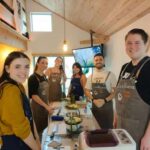
A small group makes a difference. With a maximum of 10 people, you’re not lost in a crowd, and you can actually listen while standing in line or waiting for bowls. It also helps the guide manage the choices at each ramen shop without turning everything into a rushed scramble.
You’ll be near public transportation, but since everything is walked, treat the route like part of the experience. You’ll go through the “real” Tokyo rhythm rather than jumping around with constant transfers.
One small practical note: you’ll want comfortable walking shoes and a phone with enough battery. You’ll likely be checking the guide’s directions and using photos around Shibuya Crossing.
Price and value: is $50 a good deal for ramen in Shibuya?
At $50 per person, you’re paying for a tight package: three half-sized bowls, an excellent local guide, and ramen explanations. The big value isn’t only the food—it’s the guidance.
In Tokyo, food tours work best when they remove friction. Here, that friction includes ordering decisions, understanding what ramen style you’re getting, and keeping up with menus and choices. The guide’s explanations and the option to pick from multiple ramen choices at each shop means you’re not just passively receiving whatever is offered.
Also, all the ramen broths include meat (chicken, pork, or fish), and you’re tasting three different directions in one outing. If you like ramen variety but don’t want to research 10 shops and still end up waiting in lines, this format saves your time and reduces decision fatigue.
One potential trade-off: since you’re eating three bowls, you’ll get better results if you’re the kind of person who likes comparison. If your ideal Tokyo meal is a single “one-and-done” bowl you can savor slowly, you might prefer a solo shop visit instead.
Practical tips so your order goes smoothly
These details matter, because they affect how stress-free the meal part feels.
- Cash for extras: If you want to add dumplings, rice, or other items, those additional orders are paid in cash. Come with some yen ready.
- WhatsApp setup: For contact on the day, download WhatsApp, since that’s what the group uses for communication.
- Plan for on-foot movement: The tour is mostly walking. If you need mobility support, have a taxi plan since taxi costs are at your own expense.
- Mobile ticket ready: You’ll use a mobile ticket, so keep it accessible on your phone.
- Think about diet early: Since every broth includes chicken, pork, or fish, decide ahead of time if that works for you.
If you do these simple things, the tour feels effortless: you show up, you pick a bowl at each shop, and you let the guide help you understand what you’re eating.
Who should book this Shibuya ramen crawl
This tour fits best if you want ramen variety without spending your whole day hunting shops.
I’d especially recommend it if:
- You like ramen and want a taste comparison rather than one meal.
- You enjoy learning while eating—broth, noodles, and cooking methods.
- You’re short on time and want Shibuya’s energy plus food in one smooth loop.
- You prefer a small group experience that stays organized (up to 10 people).
- You appreciate local tips that you can use afterward, not just during the meal.
It may not be the best choice if:
- You require fully accessible routes and can’t handle walking (this tour is on foot).
- You avoid animal-based broths, since all bowls include chicken, pork, or fish.
- You’re planning to do lots of extra ordering beyond ramen (extra items require cash).
Should you book this ramen tour in Shibuya?
I think it’s a strong yes if you want three ramen styles in one go and you like having a guide help you make choices. The combination of Shibuya Crossing at the start, three historic ramen stops, and small half-bowls makes the experience efficient without being rushed.
But book it with the right mindset: this is a curated tasting route, not a self-led ramble. If you want maximum freedom to linger in one shop for an hour, you might feel a bit boxed in by the structure. If you go in ready to compare flavors and enjoy guided explanations, it will land much better.
My practical test is this: if you’re the type who can get excited by ordering choices and learning what each style means, you’ll probably have a great time. If you’d rather do one perfect bowl and stop, then a solo ramen plan could be more your style.
FAQ
What’s included in the Tokyo Shibuya ramen tour?
You get 3 half-sized bowls of three different types of ramen, an excellent local guide, and explanations about ramen.
How long is the tour?
The duration is about 2 to 3 hours.
Where does the tour meet and end?
The meeting point is Shibuya 1092-chōme-29-1 Dōgenzaka, Shibuya, Tokyo 150-0043, Japan, and the tour ends back at the meeting point.
Do I need cash for anything?
Additional orders like dumplings or rice are paid in cash, so it’s a good idea to prepare yen in advance.
Will I choose what I eat?
Yes. At each of the three ramen shops, you choose one half-sized ramen from the available options.
Is there a limit on group size?
Yes. The experience has a maximum of 10 travelers/people.
Can I cancel for a refund?
Yes. You can cancel for a full refund up to 24 hours before the experience’s start time, and confirmation is received at booking.
If you want, tell me your ramen preferences (thick vs lighter broth, pork vs fish, etc.). I’ll help you decide what to pick at each stop so the flight matches your taste.