REVIEW · KARUIZAWA
Japanese Noodle Making Class
Book on Viator →Operated by SOBA LABO~Japanese noodle making class~ · Bookable on Viator
Stone-milled soba is oddly satisfying.
This hands-on class at Shinshu Soba Restaurant Yamahei is built around making soba from scratch and finishing with walnut soba served right away with tempura. I also like how it’s grounded in local Nagano food logic, from grinding the flour to shaping noodles you can actually see and feel.
One thing to keep in mind: it’s a 2-hour experience in an outlet-area restaurant near Karuizawa Station. That means a focused pace, not a slow, lingering meal after class.
In This Review
- Key highlights you should care about
- Karuizawa’s Soba Lesson Starts Near Karuizawa Shinkansen Station
- From Soba Husk to Flour: The Nagano Method You Can Actually See
- Kneading, Stretching, Cutting: Shaping Noodles with Instructor Help
- Walnut Soba in Karuizawa: Grinding Walnuts Adds a Local Flavor Twist
- Tempura + Walnut Soba Soup: Turning Your Work into an Easy Meal
- What You Actually Get for the Price (and Why It’s Not Just “Paying for Cooking”)
- Group Size, Timing, and the English-Friendly Instruction Style
- Practical Tips So Your Soba Shapes Like It Should
- Should You Book This Japanese Noodle Making Class?
- FAQ
- FAQ
- How long is the Japanese noodle making class?
- What’s included in the class fee?
- Where does the class take place and how do I get there?
- Is the instruction available in English?
- What’s the group size limit?
- What is the cancellation policy?
Key highlights you should care about
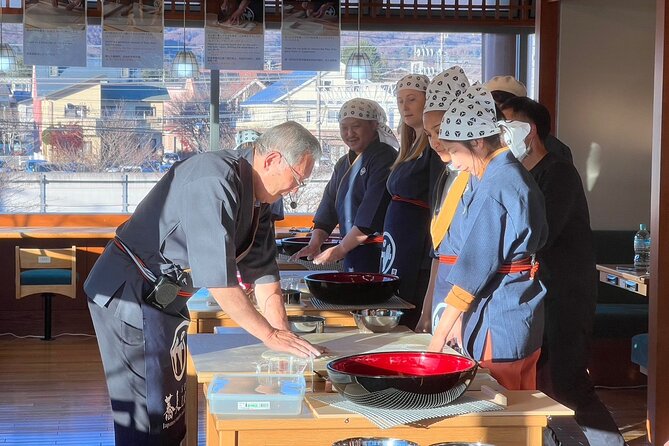
- Nagano soba in a real restaurant setting: you learn how Shinshu soba is made, not just the theory.
- You touch the process: peeling, grinding flour, and shaping noodles with instructor guidance.
- Karuizawa walnut soba: you get the famous local twist using ground walnuts in the soup.
- Workwear and tools are provided: rental of soba-making tools plus samue and maekake keeps it easy.
- English/Japanese instruction: directions are available in both languages, so you won’t feel lost.
Karuizawa’s Soba Lesson Starts Near Karuizawa Shinkansen Station
Karuizawa is a comfortable base, and this class is placed for easy access: the meeting point is at 1178-161 Karuizawa, Kitasaku District, Nagano, and the restaurant is about a 5-minute walk from Karuizawa Shinkansen Station. If you’re moving around by train, that location matters. You can plan your day without building extra time around transit.
The class runs about 2 hours and ends back at the meeting point, so it fits cleanly between sightseeing blocks. I like that the tour uses a mobile ticket, which is one less thing to manage while you’re in Japan.
You’ll be joining a maximum group size of 32, which keeps things organized enough for an activity that requires hands-on attention. It’s not private, but it also isn’t so large that you feel like a spectator.
From Soba Husk to Flour: The Nagano Method You Can Actually See
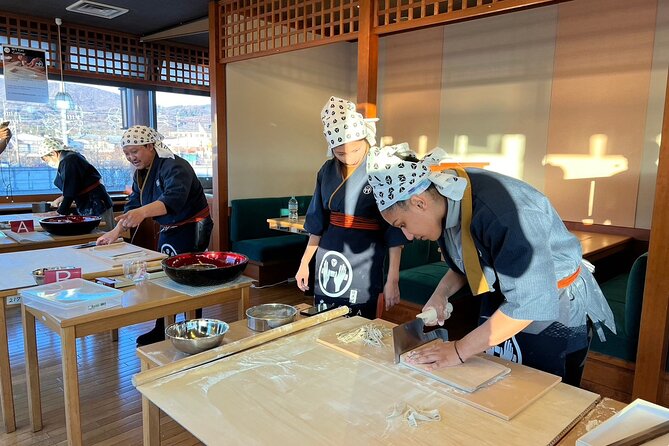
The best part of this workshop is that it treats soba like a craft. It’s not only about kneading noodles. You also get involved earlier in the process, including peeling off the soba husk and grinding soba flour using a millstone and water mill.
That detail is more than showy. Nagano’s geography helps explain why this matters: it’s mountainous with fewer flat farming areas, and soba is well-suited to high-and-cold conditions. When you see the flour-making step in person, it clicks that soba isn’t just a dish—it’s tied to how the region grows and processes the ingredients.
In other words, you come away with better taste memory. Later, when you eat the noodles you made, you’ll be able to connect the bite to the texture and aroma from milling. That’s what makes the class feel real, not like a cooking demo where everything happens off-camera.
Kneading, Stretching, Cutting: Shaping Noodles with Instructor Help
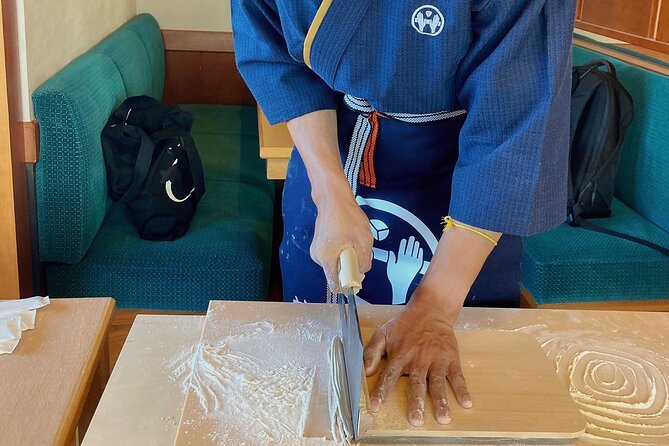
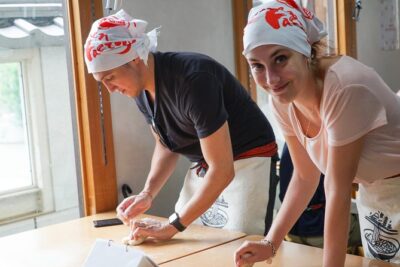
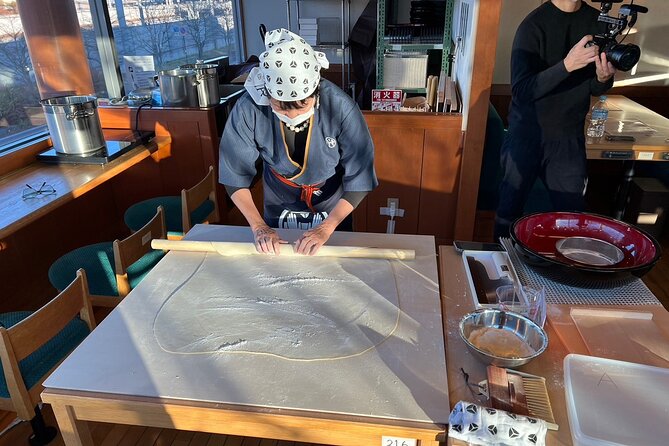
Once the flour is ready, the class moves into the core soba noodle steps: kneading, stretching, and cutting. An experienced instructor guides you through what to do and how it should look and feel while you work.
This is where you’ll notice something important: soba has a learning curve. The dough behaves differently than wheat-flour dough, and stretching takes a steady hand. If you’ve never made noodles before, that’s fine. The structure is set up so you learn each step while you’re still fresh, and the instructor support helps you correct course before you waste ingredients.
From a practical viewpoint, the pacing works well for most people because you’re constantly switching tasks. Knead a bit, stretch, cut—repeat. It’s engaging work, and it helps you stay focused for the full 2-hour session without your attention wandering.
Walnut Soba in Karuizawa: Grinding Walnuts Adds a Local Flavor Twist
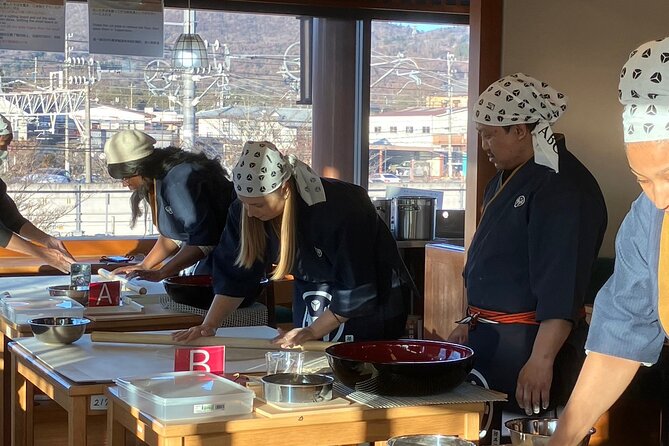
Karuizawa has a specialty that stands out in the soba world: walnut soba. In Nagano’s Shinshu tradition, ground walnuts are used in the soup, creating that distinctive nutty character.
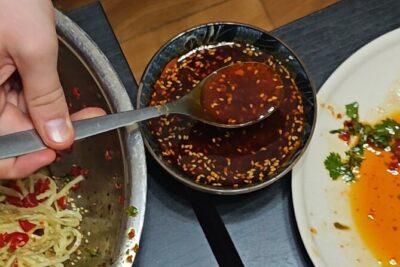
During the class meal, they serve your soba with walnut sauce/soup, and there’s an extra hands-on touch: walnuts are provided so you can try grinding the walnuts yourself in a small mortar and add them to your bowl. That little step is easy to overlook, but it’s fun and memorable. It turns the walnut flavor from something you simply receive into something you actively build.
Also, because walnut soba is part of Karuizawa’s identity, it helps you eat beyond generic Japanese noodles. You’re tasting what people actually associate with the area, not a version that could be found anywhere.
Tempura + Walnut Soba Soup: Turning Your Work into an Easy Meal
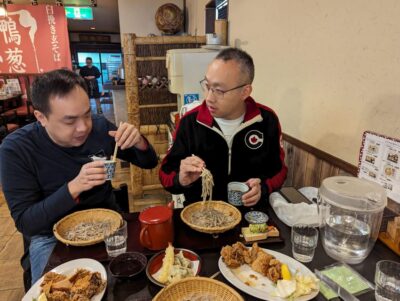
After shaping your noodles, you get them served immediately with tempura and walnut soba soup. The timing is important. Noodles are at their best when you eat them soon after they’re prepared, and this class is set up so you’re not waiting hours for the payoff.
Tempura alongside soba also makes sense. Soba brings a nutty, earthy base, while tempura adds crisp texture and a warmer, lighter bite. Together, it makes a balanced meal without needing extras like side dishes or complex ordering.
You’ll also understand why walnut soba works. The nuts add richness, and the soup format keeps it comforting rather than heavy. It’s the kind of food pairing that sounds simple until you experience how the flavors land together.
What You Actually Get for the Price (and Why It’s Not Just “Paying for Cooking”)
The price is listed at $91.21 per person, and the duration is about 2 hours. For some cooking classes, that number feels high because you get mostly watching time.
Here, you’re paying for a full set of real tasks: making noodles from scratch elements, using milling equipment (including millstone and water mill), and getting a meal at the end. Plus, the class includes the rental of soba noodle making tools, plus traditional work clothes: samue and maekake. You also receive a gift—tenugui, a traditional Japanese towel.
That “included” list is what turns this from a quick snack activity into a cultural workshop. It also means you don’t have to bring anything special besides yourself and whatever camera you like to use for food (though hands will be busy most of the time).
One more value point: the location makes the cost feel smarter. Being near Karuizawa Shinkansen Station reduces the need for private transport. Even if you’re not staying in the station area, you can usually build this class into a day with less wasted time.
Group Size, Timing, and the English-Friendly Instruction Style
With a maximum of 32 participants, the class is large enough to be efficient but not so huge that you’re floating through it alone. The instructor guidance is part of why the workshop works for first-timers.
The instruction format is also a plus. Guidance is available in English and Japanese, which removes the biggest barrier for food classes in Japan: not understanding what to do with your hands. Even if you don’t speak Japanese, you can follow the steps and keep moving.
Timing matters too. Because it’s about 2 hours, you should come with a bit of appetite and a willingness to focus. You won’t leave with a spread of kitchen skills for a lifetime, but you will leave with a real understanding of soba as a process.
This style is also family-friendly. The setting includes soba-making costumes and pedestals for elementary school students, so children can take part in a way that doesn’t look like adult cosplay. If you’re traveling with kids, this can be a calmer, hands-on activity that doesn’t require heavy walking.
Practical Tips So Your Soba Shapes Like It Should
This class is physical and hands-on, so your choices outside the kitchen affect how smooth the session feels.
- Wear comfortable clothes you don’t mind getting a little dough-on-your-fingers time. The maekake apron and samue rental help, but you’ll still be working with flour.
- Bring your curiosity, not your precision. If your cuts aren’t perfect, it’s still your soba, and it will still be delicious served fresh.
- If you’re interested in the walnut part, pay attention during the walnut prep. Grinding and adding walnuts is one of those moments that makes the meal feel personal.
- Since it’s near Karuizawa Station, plan to arrive a few minutes early so you can settle in before tools and ingredients come out.
One more timing thought: you might be booking this in advance, and the listing data shows people often reserve ahead (on average 64 days). That’s usually a sign that slots fill, especially around peak travel seasons.
Should You Book This Japanese Noodle Making Class?
If you want a Japanese food experience that’s more than eating, I’d book it. You’re not just tasting soba—you’re learning how Nagano soba becomes noodles through peeling, milling, kneading, stretching, and cutting. The meal at the end—your noodles plus tempura and walnut soba soup—makes it easy to rate the experience immediately with your taste buds.
I’d skip it only if you strongly prefer passive activities, or if you only want a quick food stop with minimal participation. At 2 hours, the class asks you to do things, and the value is highest when you’re willing to get flour on your hands.
If you’re in Karuizawa with a train day planned, this also makes sense logistically. The close station access and the meal-included format reduce friction and help you turn travel time into something you’ll remember.
FAQ
FAQ
How long is the Japanese noodle making class?
It runs for about 2 hours (approx.).
What’s included in the class fee?
The fee includes soba noodles you make and eat at the restaurant, tempura, walnut soba soup, an experienced instructor, rental of soba noodle making tools, rental of traditional samue and maekake, a tenugui gift, and all fees and taxes.
Where does the class take place and how do I get there?
The meeting point is Shinshu Soba Restaurant Yamahei at 1178-161 Karuizawa, Kitasaku District, Nagano 389-0102, Japan. It’s about a 5-minute walk from Karuizawa Shinkansen Station.
Is the instruction available in English?
Instructions are available in both English and Japanese.
What’s the group size limit?
The experience has a maximum of 32 travelers.
What is the cancellation policy?
Free cancellation is available, and you can cancel up to 24 hours in advance for a full refund. If you cancel less than 24 hours before the experience starts, the amount paid is not refunded.