REVIEW · CHENGDU
Learn cold noodle and wolf-teeth potato at local home
Book on Viator →Operated by Travel Like A Local · Bookable on Viator
Zigong snacks hit different when you cook them. What I love most is the authentic Zigong method taught by Karen, and how you actually do the work step by step instead of just watching. The two dishes are fun to make and even better to eat right after, but one thing to consider is spice: if you can’t handle chili, tell your host clearly so they can skip it.
This experience is also personal in a way that matters. Karen grew up in Zigong, tied to the salt-factory culture there, so you’ll learn why their flavor approach leans on well salt and a local-style chili oil, not shortcuts.
You’ll do this with a small group (up to 6), in roughly 1 hour 40 minutes to 2 hours, at a meeting point on Zhongxin Road near public transit. Since it’s a hands-on home kitchen, you’ll want to arrive on time and share any allergy or dietary limits up front.
In This Review
- Key Things to Know Before You Start
- Zigong Cold Noodles and Wolf-Teeth Potatoes: Why This Pair
- Meeting on Zhongxin Road: A Practical Home-Kitchen Setup
- What Karen Covers First: Ingredients, Process, and the Real Reason for Flavor
- Hands-On Cold Noodles: Steam, Cool, Dress
- Wolf-Teeth Potatoes: Cutting and Frying for Crunch
- Taste Test and Sichuan Food Notes You’ll Actually Use
- Price and Value: Why $31 Makes Sense for This Hands-On Format
- What to Expect During the 1h40–2h Flow
- Who This Class Is Best For
- Should You Book This Zigong Snack Cooking Class?
- FAQ
- What dishes will I learn to make?
- Where does the experience start?
- How long does the experience take?
- How much does it cost?
- What’s included in the price?
- Are dietary restrictions handled?
- Can I request less or no spice?
- What’s the group size limit?
- Is there an age requirement?
- Is transportation included?
- FAQ
- Can I cancel for a full refund?
- When is the cancellation deadline?
- What if I cancel less than 24 hours before?
- What happens after the tour ends?
- Do I need to confirm after booking?
- What ticket type will I use?
- What should I bring?
Key Things to Know Before You Start
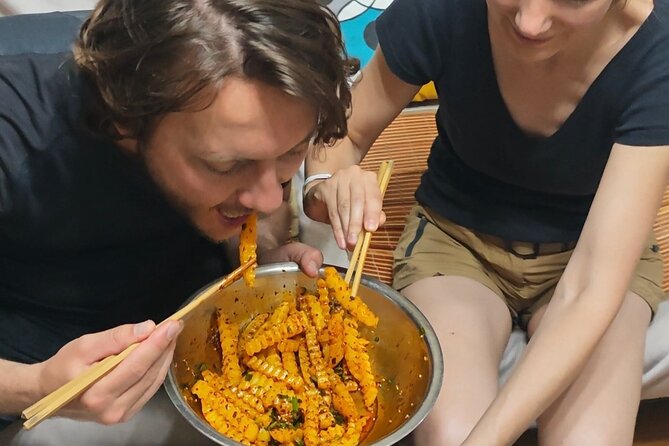
- Zigong roots, Sichuan flavors: cold noodles and wolf-teeth potatoes with hometown-style salt and chili oil
- Small group of up to 6 so you get real hands-on time
- Step-by-step guidance from Karen, including how to cook and how to plate your own work
- Chili oil recipe included so you can recreate the flavor later
- Everything for cooking is provided: ingredients, snacks, apron, water, and equipment
Zigong Cold Noodles and Wolf-Teeth Potatoes: Why This Pair
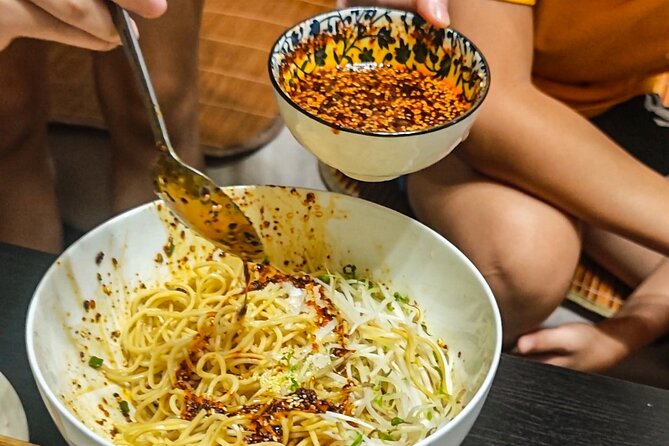
In Sichuan food, texture is half the story. Cold noodles are all about bite, chew, and the cool contrast to chili heat, and Zigong versions lean into that balance with a dressing that hits salty and spicy in the right order.
Then there are wolf-teeth potatoes, a snack that sounds playful and eats seriously. The charm is the cut and crunch you get from proper prep and frying, and the fact that it’s a classic everyday treat in Zigong. If you’ve ever wished you knew how street-food texture happens in the kitchen, this is the kind of class that teaches you that muscle memory.
What makes the class especially useful is that it doesn’t treat these dishes like museum food. It’s framed like home cooking: the kind made after school, the kind cooked at a stall, the kind you can repeat when you go back to your own kitchen.
You can also read our reviews of more tours and experiences in Chengdu.
Meeting on Zhongxin Road: A Practical Home-Kitchen Setup
You start at Zhongxin Road (Zhong Xin Lu, Jin Niu Qu, Cheng Du, Si Chuan Sheng, China, 610032). The area is near public transportation, which matters because you don’t want your whole evening spent navigating. You’ll also get a mobile ticket for the activity.
The group stays small—maximum 6 travelers—which makes a difference. In a big class, you might hover; here, you’ll have space to cut, stir, and cook. If you’re nervous about cooking, that smaller setup is a big confidence boost.
Timing is simple: expect about 1 hour 40 minutes to 2 hours. Come on time, because home kitchens run on flow—ingredients, heat, and cooling all have their own clock.
What Karen Covers First: Ingredients, Process, and the Real Reason for Flavor
Before the stove work starts, you’ll be introduced and get familiar with the ingredients and process for both dishes. That early walkthrough is not just friendly—it’s the part that helps you understand why a step exists.
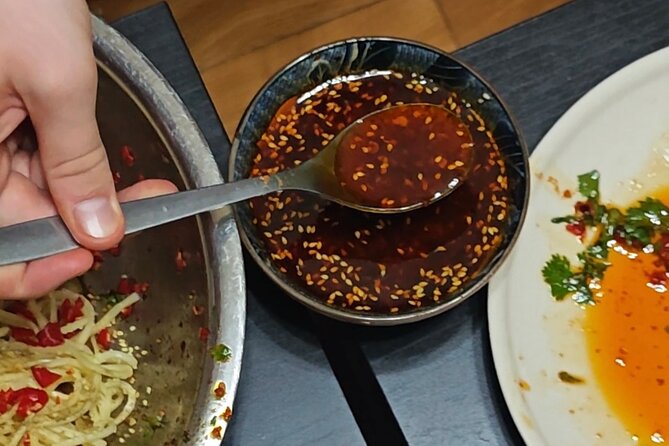
Karen also teaches how to make chili oil using a home recipe. In Sichuan cooking, chili oil isn’t just chili in oil; it’s the base that pulls flavors together, especially for cold noodles. If you’ve ever made chili oil before and it tasted flat, this class is aimed at fixing that with the right approach and hometown flavor logic.
One more thing I appreciate: the class is taught by someone who learned the methods from their mom, not from a show kitchen. You’re getting home technique—cutting, frying, steaming, and cooling—plus a clear path for how to replicate it later.
Hands-On Cold Noodles: Steam, Cool, Dress
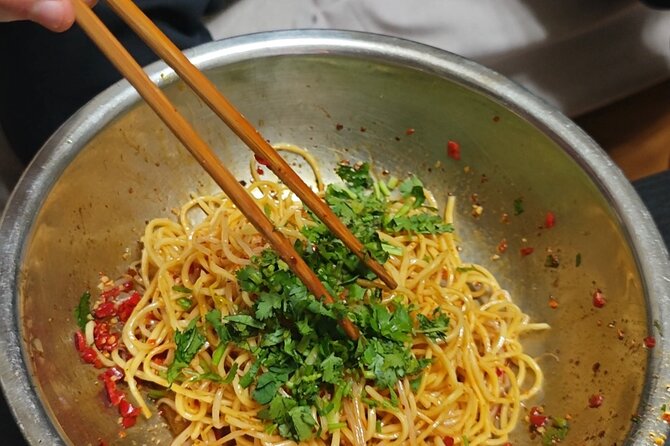
Cold noodles in this class follow a key rhythm: steam, cool, then dress. The steaming step matters because it sets the noodle texture, and cooling isn’t just a wait—it’s what lets the noodles become pleasantly chewable and ready for sauce.
You’ll be guided through the steps while you cook, so you’re not stuck doing one tiny task. The work is fast, practical, and designed for non-chefs, which is important when you’re on a trip and don’t want a science project.
Once the noodles are ready, you’ll flavor them in the Zigong style. Expect a dressing that relies on well salt and chili oil. If you’re sensitive to heat, you’ll have control here: if you can’t eat spicy food, Karen won’t put chili in your portion.
Wolf-Teeth Potatoes: Cutting and Frying for Crunch
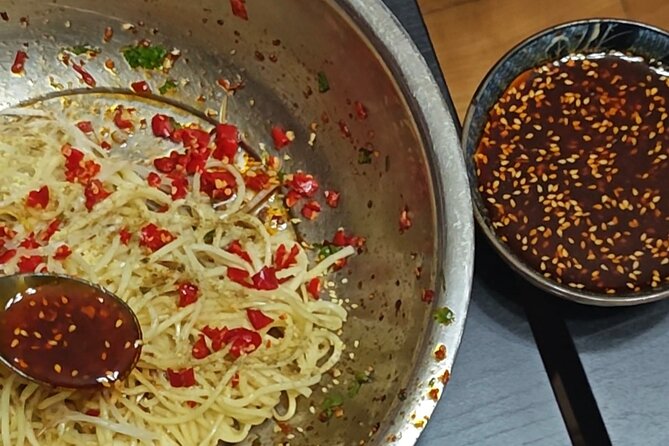
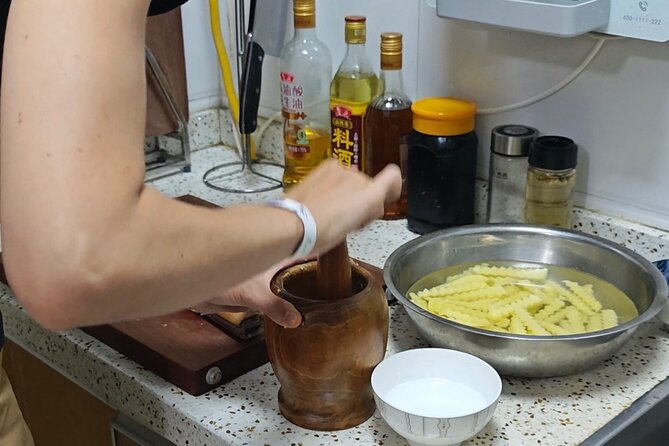
The wolf-teeth potato part is where you’ll feel the snack come alive. You’ll learn the preparation steps—especially cutting—and then you’ll fry the potatoes using the authentic home method.
The class focuses on what your hands do, not fancy equipment. That’s a big advantage for taking this home later: most people can repeat a good cut and a good fry technique even without a pro kitchen.
After frying, you’ll taste what you made, and that’s the point where it clicks. Proper frying gives you the crunch you expect from the name, and proper seasoning gives you that addictive snack feel rather than plain fried potato.
Taste Test and Sichuan Food Notes You’ll Actually Use
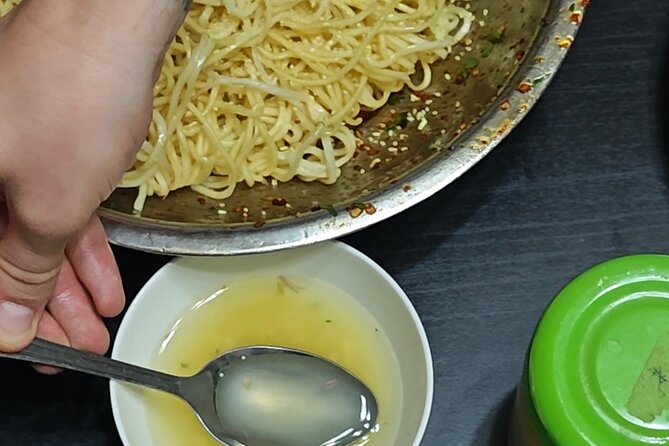
After finishing cooking, you taste your own dishes and share your feelings with the group. That part feels simple, but it helps you calibrate what good is supposed to taste like—how salty should it feel, how the chili oil should sit, and how the noodle texture should behave.
Karen also shares characteristics of Sichuan and Zigong cuisine during the meal. You don’t need to memorize a lecture to benefit from this. You’ll walk away with a clearer sense of what to look for when you eat other Sichuan foods, and how Zigong flavor fits into the wider Sichuan picture.
I like that the class treats the food as culture you can cook, not just a dish you can order. If you plan to eat Sichuan while you’re in Chengdu anyway, this gives you a cheat sheet for understanding what you’re tasting.
Price and Value: Why $31 Makes Sense for This Hands-On Format
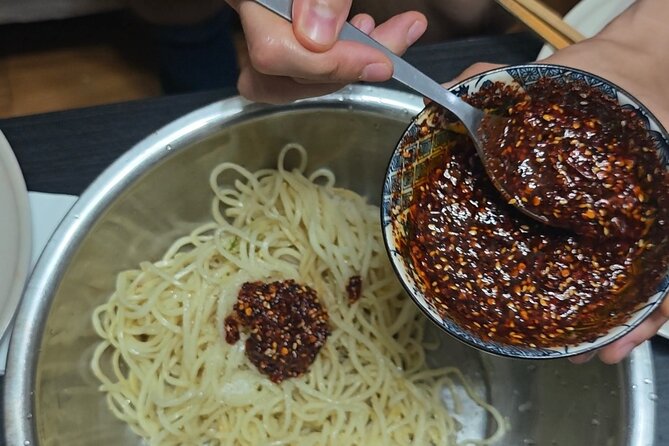
At $31 for about 2 hours, the value is strong because it’s not only instruction. You get snacks, all food ingredients, recipe notes, an apron, water, and cooking equipment. That removes the usual “hidden costs” problem with food experiences.
Also, you’re paying for technique, not just a plate of food. Cold noodles and wolf-teeth potatoes are both specific, and chili oil is a major flavor lever in Sichuan cooking. If you leave with even a workable chili oil method, the class turns into something you’ll use after your trip.
One more value point: the small group size keeps attention on your tasks. In a larger setting, you might feel like you’re waiting your turn. Here, the setup encourages hands-on time.
What to Expect During the 1h40–2h Flow
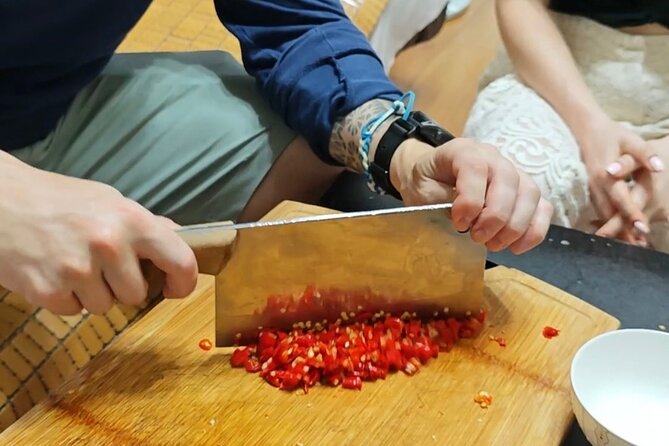
You can think of the experience in a few stages. First comes introductions and a clear rundown of ingredients and the overall process for both dishes. Then you shift into cooking mode: making cold noodles with steaming and cooling steps, preparing and frying the wolf-teeth potatoes, and learning chili oil along the way.
Finally, you taste your finished food and talk about what you made and why it tastes the way it does. It’s not a marathon, so it works well for a day when you still want time to explore Chengdu afterward.
If you’re traveling with a tight schedule, aim for early enough that you don’t feel rushed. Home kitchens move faster than restaurants, and heat and cooling steps can’t be delayed.
Who This Class Is Best For
This is a great fit if you want an authentic Sichuan snack experience you can repeat. It’s especially good for people who like practical cooking and want to learn how texture is built—steaming and cooling for noodles, cutting and frying for potatoes.
It’s also a solid choice for food lovers who want context without lectures. Karen’s Zigong background gives the dishes meaning, and the Sichuan and Zigong notes help you connect what you cook with what you’ll eat later.
If you’re only looking for a light tasting experience with no cooking, this may feel like more work than you planned. Still, the format is designed for most people to participate, and the tasks are guided.
Should You Book This Zigong Snack Cooking Class?
If you want more than a meal and you like the idea of taking real technique home, I’d book it. The best reasons are the hands-on guidance, the authentic Zigong methods, and the fact that chili oil is part of what you learn, not an afterthought.
Book it especially if you’re curious about why Sichuan cold noodles taste the way they do and how wolf-teeth potatoes get that classic crunch. Also, if you have spice limits, say so before you arrive. Karen will adjust by skipping chili when you can’t eat spicy food.
Skip it only if you hate cooking steps or want a purely passive activity. Otherwise, this is the kind of Chengdu experience that feels personal, practical, and worth your time.
FAQ
What dishes will I learn to make?
You’ll learn to cook cold noodles and wolf-teeth potatoes, and you’ll also learn how to make chili oil.
Where does the experience start?
The meeting point is Zhongxin Road (Zhong Xin Lu, Jin Niu Qu, Cheng Du, Si Chuan Sheng, China, 610032).
How long does the experience take?
It lasts about 1 hour 40 minutes to 2 hours.
How much does it cost?
The price is $31.
What’s included in the price?
Included: snacks, all food ingredients, recipe, apron, water, and cooking equipment.
Are dietary restrictions handled?
Yes. You should tell the host about any food allergy or dietary restrictions before you start.
Can I request less or no spice?
Yes. If you can’t eat spicy food, the host won’t put chili.
What’s the group size limit?
The activity has a maximum of 6 travelers.
Is there an age requirement?
Minimum drinking age is 18 years, and children must be accompanied by an adult.
Is transportation included?
No. Transportation to or from attractions is not included.
FAQ
Can I cancel for a full refund?
Yes. You can cancel up to 24 hours in advance for a full refund.
When is the cancellation deadline?
Cut-off times are based on local time. For a full refund, you must cancel at least 24 hours before the experience start time.
What if I cancel less than 24 hours before?
If you cancel less than 24 hours before the experience starts, the amount paid is not refunded.
What happens after the tour ends?
The activity ends back at the meeting point.
Do I need to confirm after booking?
You’ll receive confirmation at the time of booking.
What ticket type will I use?
You’ll have a mobile ticket.
What should I bring?
The class includes an apron, water, and cooking equipment, so you mainly just need to show up on time and share any dietary needs.