REVIEW · SEOUL
Seoul: Handmade Noodles with Korean Grandma
Book on GetYourGuide →Operated by Goodmate Travel · Bookable on GetYourGuide
Your hands learn Korean noodles fast. I love that Halmoni-led cooking turns it into a handmade kalguksu workshop, so you knead, cut, and cook with a grandma chef in a cozy private kitchen.
I also like the heartfelt stories and relaxed conversation, especially when hosts such as Jade speak English and pull everyone into the meal afterward. At $68, it is not a throwaway budget activity, so you’re paying for hands-on teaching plus a full dinner experience.
In This Review
- Why Handmade Kalguksu With a Korean Grandma Feels Different
- The Meeting Point in Mapo-gu: Tojeong-ro Basics
- Welcome, Neighborhood Context, and Your Hosts
- From Kneading Dough to Knife-Cut Noodles (Kalguksu)
- What’s Actually on the Table: Meal, Dumplings, Kimchi, and More
- Stories, Laughs, and Cultural Connection Without a Lecture
- Dietary Preferences: How the Class Handles Vegan and Gluten-Free
- English Instruction and Group Energy: Comfortable, Not Stuffy
- Price and Value: What $68 Buys You in Seoul
- Who This Class Suits Best (And Who Might Feel Unsatisfied)
- Should You Book This Noodle-and-Grandma Class?
- FAQ
- Where does the experience meet in Seoul?
- What do I make during the class?
- What happens after the cooking?
- Can the class accommodate dietary restrictions?
- Is the instruction available in English?
- What is included in the price?
- Does the experience include alcohol?
- What is the cancellation policy?
- Is pay later available?
Why Handmade Kalguksu With a Korean Grandma Feels Different
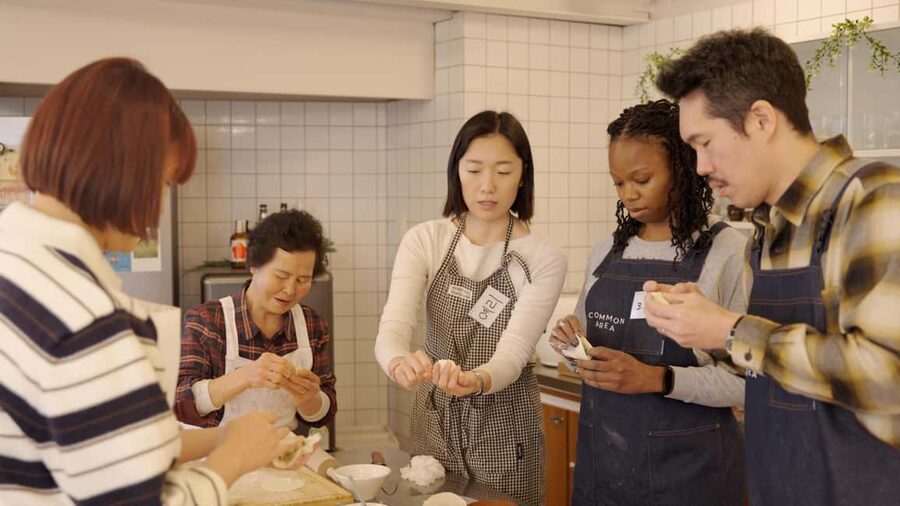
This is Seoul food you can’t fake. Yes, you’ll make Korean noodles, but the bigger payoff is how you make them. Instead of watching a demonstration, you work the dough, cut the noodles, and build a bowl that tastes like somebody cared about every step.
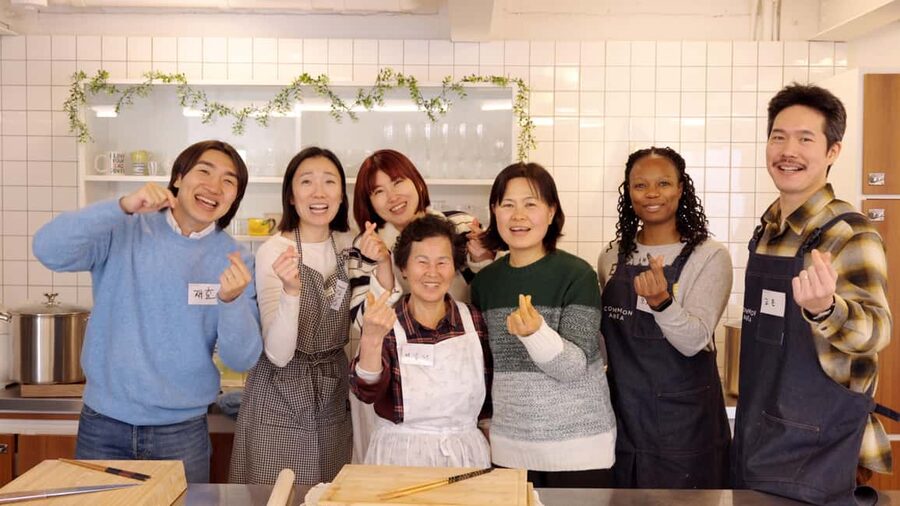
What makes it stand out is the grandma-host energy—warm, chatty, and very human. In past sessions, hosts including Halmoni and English-speaking guides like Jade have set the tone right away, with an inviting welcome and an atmosphere that feels more like sharing dinner with family than taking a class.
There is also a cultural layer built into the night. You’re not just learning technique; you’re hearing the stories and context that make Korean noodle traditions land in your brain (and on your tongue). By the time you sit down to eat, you don’t feel like a customer. You feel like part of the table.
The Meeting Point in Mapo-gu: Tojeong-ro Basics
The experience starts at 2F, 53-9, Tojeong-ro, Mapo-gu, Seoul. It is a simple setup, and the activity ends back at the meeting point, so you do not need to plan a complicated route afterward.
Because this is kitchen-based and hands-on, you’ll get more out of it if you arrive with a clear head and an empty stomach. Give yourself a little buffer for transit and getting oriented. Once you’re there, the evening flows: welcome, a quick setup, then you’re in the dough.
A small practical note: Seoul can be busy, and the address is precise. If you use a map app, drop the full address exactly as written to avoid wandering up the wrong street level.
You can also read our reviews of more tours and experiences in Seoul.

Welcome, Neighborhood Context, and Your Hosts
Before the noodles, you’ll get a warm welcome and some real context. Past sessions have included explanations about the neighborhood, culture, who your hosts are, and how the evening will work—so you know what’s happening and you feel comfortable jumping in.
If you want to connect quickly, pay attention in this early moment. It’s where the class turns from a list of tasks into an actual experience. The English instruction is helpful here. You’re not left guessing, and you can ask questions while things are still calm.
You may meet hosts like Jade or Miki alongside Halmoni (and other team members). The common thread is the same: they speak English and they clearly enjoy talking with people—especially while everyone is working together.
From Kneading Dough to Knife-Cut Noodles (Kalguksu)
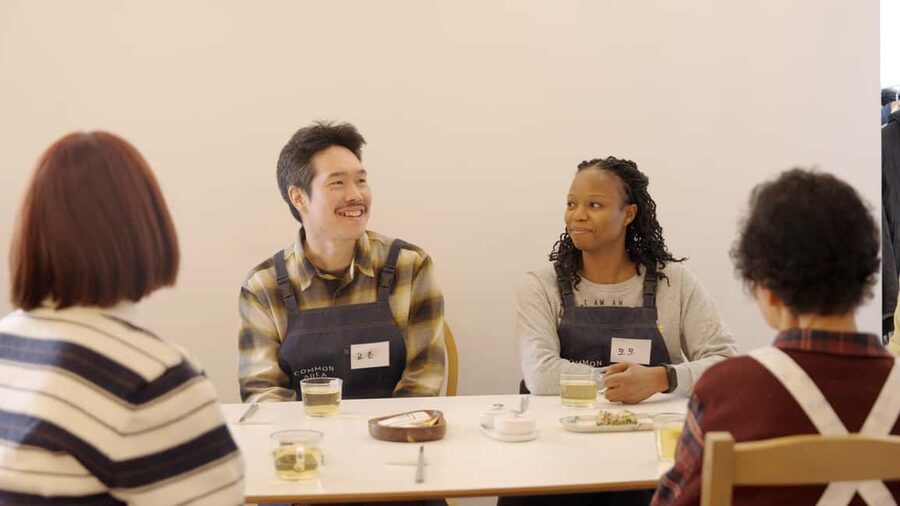
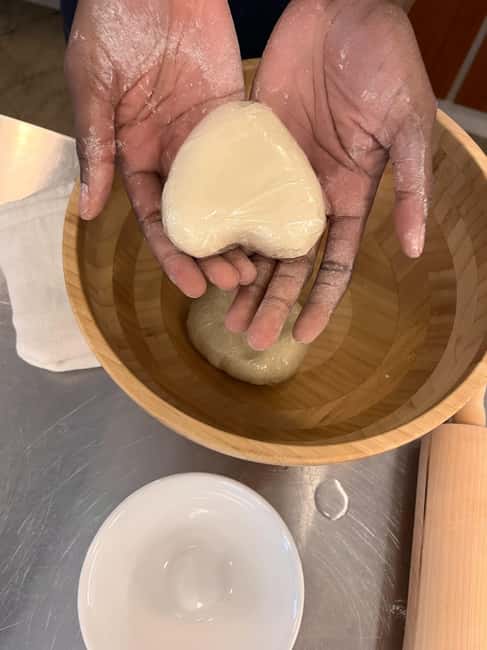
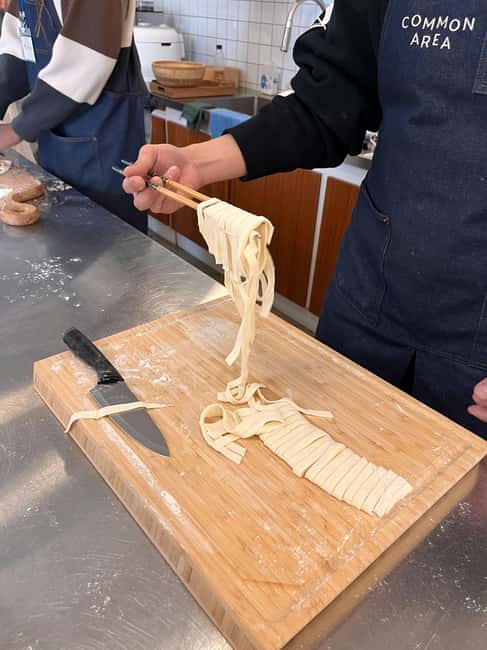
The main event is Kalguksu, Korean knife-cut noodles, made from scratch. This is not about shortcuts. You’ll knead the dough, cut the noodles, and then assemble your bowl with toppings and ingredients.
Why this matters: knife-cut noodles have texture and character that you don’t get from dried noodles or pre-made strips. When you cut them yourself, you understand how thickness changes bite, how dough handling affects the final noodle feel, and how the whole bowl comes together.
Here’s what you should watch for while you’re working:
- Dough handling: notice how the dough feels as it comes together. When it is right, it is easier to work with and cuts more cleanly.
- Consistency in cutting: aim for even-ish lengths. You do not need to be perfect, but you’ll see how small differences affect how the noodles eat in the broth.
- Assembly mindset: you’re building a bowl, not plating for photos. Texture and balance come first.
Even if you’ve cooked before, this feels different because it’s a Korean noodle method taught in a real kitchen, led by people who treat the process like a craft. You end the night not just with dinner, but with a repeatable memory of how the steps fit together.
What’s Actually on the Table: Meal, Dumplings, Kimchi, and More
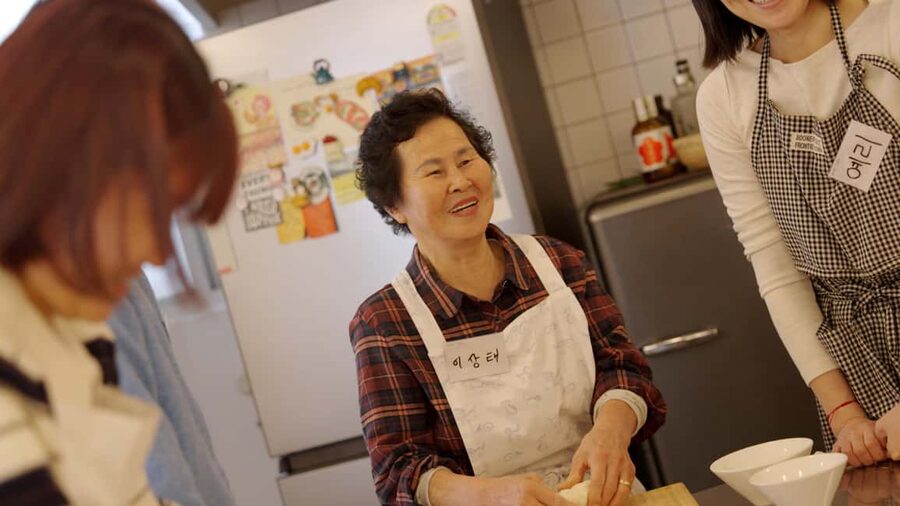
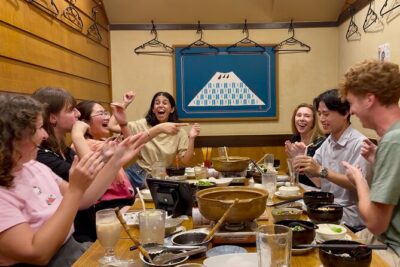
After the noodle work, you sit down and share the meal together—very family-style. This is the part people tend to remember most, because the food is paired with conversation and laughter, not just serving.
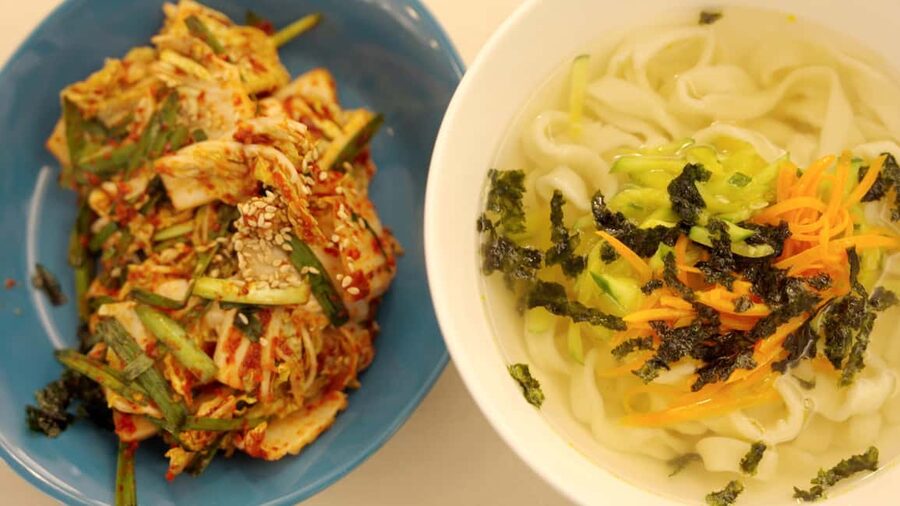
The meal typically includes items like:
- Kimchi
- Dumplings
- Noodle dishes (more than one, in some sessions)
And yes, a makgeolli toast can happen. You’re welcome to join if alcohol fits your preferences; if not, the structure still works because the meal is the focus.
What I like about this setup is that it gives you a clear reason to learn. You make noodles, you see how they taste in a bowl, and then you eat them with other people while the hosts keep things friendly. That rhythm is why it doesn’t feel rushed—more cooking evening than checklist.
You may also come away with photos and recipes as souvenirs from the session, which makes it easier to recreate the night at home later. Even if you don’t cook Korean food often, having the recipe helps you remember ratios and method.
Stories, Laughs, and Cultural Connection Without a Lecture
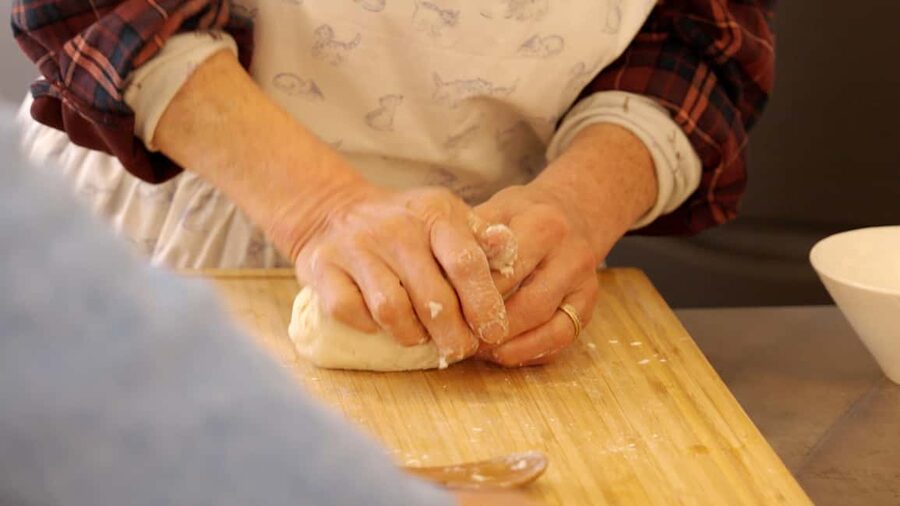
A big part of the value here is the human conversation. Korean food culture is social. It’s about sharing, helping, and talking while you eat. This class leans into that idea instead of treating stories like add-on trivia.
You’ll hear heartfelt stories tied to culinary traditions. In practice, that means your explanation of noodles doesn’t float off into theory. It stays grounded in why people make these dishes, why certain steps matter, and how hospitality shows up at the table.
Hosts such as Halmoni and English-speaking guides like Jade have a way of making questions feel normal. If you’re curious about ingredients, noodle techniques, or everyday food routines, this is the setting where you can ask and get a real answer.
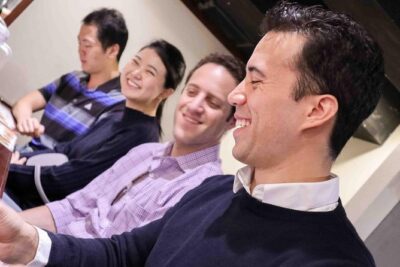
And the laughter piece is real. You’re working hands-on, you’re learning something new, and nobody is treating mistakes like failures. That keeps the mood light while you’re still learning a skill.
Dietary Preferences: How the Class Handles Vegan and Gluten-Free
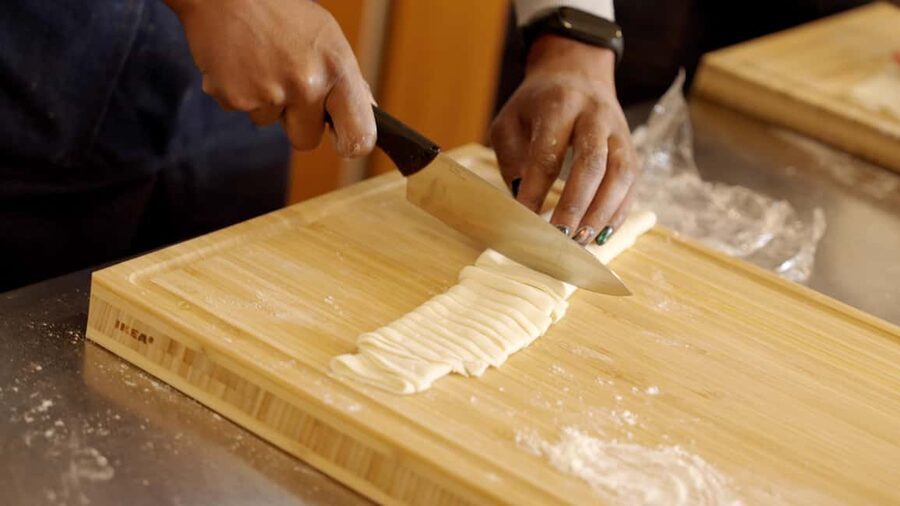
Good food experiences should include your needs, not fight them. This one explicitly says it can be tailored for dietary preferences—so whether you’re vegan, gluten-free, or managing other restrictions, they’ll work with you.
How to use that advantage:
- Share your restrictions clearly when you book.
- Ask what ingredients are involved if you have specific concerns (especially for anything related to gluten).
- Keep an open mind about substitutions. The goal is still a satisfying, Korean-style bowl, not a compromise that tastes like sadness.
The best part is that the flexibility is built into the concept. It’s not marketed as one fixed menu that happens to be able to swap things. The class is designed to adapt, which is exactly what you want when you’re traveling.
English Instruction and Group Energy: Comfortable, Not Stuffy
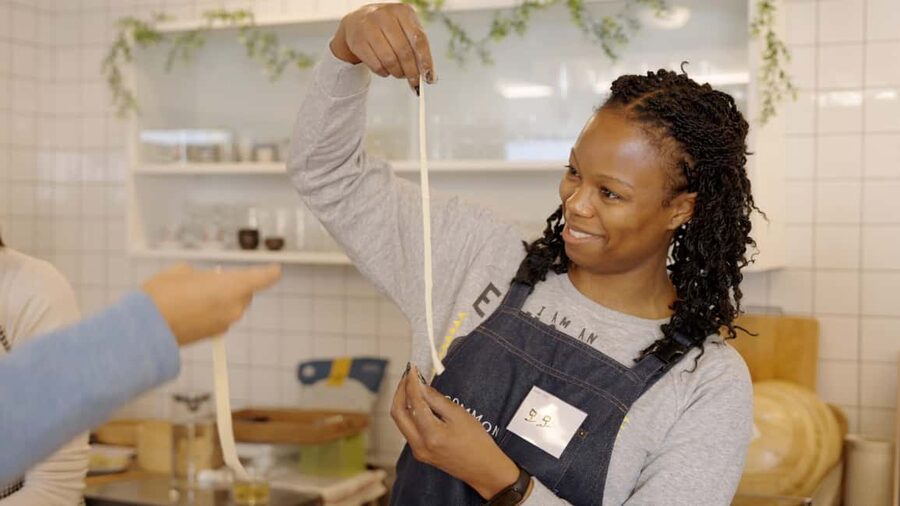
This workshop is in English, and that matters more than it sounds. In a hands-on cooking setting, clear language helps you understand technique and ask follow-ups. It also helps you relax so you can enjoy the evening instead of focusing on translation.
The vibe is also described as intimate and un-rushed in past experiences. Families have enjoyed it too, including groups with children and teens. That suggests the class doesn’t assume everyone is an advanced cook or that it’s only for adults who love measuring ingredients like lab work.
If you’re traveling with different ages or skill levels, this is a good pick because the tasks are learnable, and the atmosphere supports group participation.
Price and Value: What $68 Buys You in Seoul
Let’s talk money like an adult. $68 per person is not cheap, especially in a city where you can eat well for far less.
So why pay this much? Because you’re paying for several things bundled together:
- All fees and taxes
- A meal (not just a snack)
- Beverages
- Ingredients and instruction to make noodles from scratch
- A hosted experience where you also get cultural context and conversation
Also, the cost isn’t only for eating. It includes the skill component: kneading, cutting, and assembling knife-cut kalguksu in a real kitchen. That turns a dinner outing into a repeatable memory—and possibly a recipe you can use again at home.
If your travel goal is to do at least one authentic hands-on activity, this price can make sense. If your goal is mostly to sample multiple foods cheaply, you might skip this and do street food instead. Both are valid strategies. The key is matching the spend to your trip style.
Who This Class Suits Best (And Who Might Feel Unsatisfied)
This works best if you want:
- A hands-on Korean cooking experience, not just a tasting
- A warm, social dinner with Halmoni-style hospitality
- A class where you can talk, ask questions, and learn in English
- Support for dietary needs like vegan or gluten-free
It might not be ideal if you:
- Expect a sightseeing-heavy evening. This is mostly about cooking and eating in the kitchen space.
- Prefer browsing markets and snapping photos over cooking tasks.
- Want a very quick, low-cost food hit. It is priced like a full experience.
That said, even if you’re not a strong cook, you’ll likely enjoy it because the process is taught step-by-step and you’re not doing it alone.
Should You Book This Noodle-and-Grandma Class?
I think you should book it if you value authentic cooking, social cultural exchange, and a real meal at the end of the work. The biggest reason is simple: you’re making kalguksu from scratch with a Korean grandma host, then sharing the result family-style. That combination is hard to replicate.
Before you reserve, ask yourself two quick questions:
- Do you want to learn a technique you can repeat, not just eat once?
- Are you comfortable paying for instruction, meal, and beverages as a package?
If yes, this is a smart splurge. If you’re chasing bargains only, you can still eat Korean noodles in Seoul—but you won’t get the same knife-cut learning experience and grandma-led storytelling at the table.
FAQ
Where does the experience meet in Seoul?
It meets at 2F, 53-9, Tojeong-ro, Mapo-gu, Seoul, Republic of Korea.
What do I make during the class?
You’ll make Kalguksu (Korean knife-cut noodles) from scratch, including kneading the dough, cutting the noodles, and adding toppings/ingredients.
What happens after the cooking?
After cooking, you sit down together to share the meal with your hosts and other participants, with beverages included. A makgeolli toast may happen.
Can the class accommodate dietary restrictions?
Yes. The experience says it can be tailored for vegan, gluten-free, and other dietary preferences.
Is the instruction available in English?
Yes, the languages listed for the experience include English.
What is included in the price?
The price includes all fees and taxes, the meal, and beverages.
Does the experience include alcohol?
A makgeolli toast is mentioned as a possibility, and beverages are included.
What is the cancellation policy?
You can cancel up to 24 hours in advance for a full refund.
Is pay later available?
Yes. The experience offers Reserve & Pay Later, meaning you can book your spot and pay nothing today.
If you want, tell me your travel dates and dietary needs, and I’ll help you decide if this fits your Seoul day plan versus a cheaper noodle-and-kimchi meal.