REVIEW · TAITO CITY
Made from flour in 30min! Ramen-noodle Making Experience!
Book on GetYourGuide →Operated by SOBAGIRI楽常 · Bookable on GetYourGuide
Hand-cut ramen in under an hour sounds odd. At SOBAGIRI-RAKUJYO in Asakusa’s Kappabashi area, you’ll learn 30-minute manual noodle cutting in a clean open-kitchen studio, then eat ramen made from your own work. I like the fast time performance (it fits between shopping and sights) and the professional, bright setup that feels more like a proper workshop than a dusty kitchen. One drawback: this isn’t a fit if you have a buckwheat allergy or need a gluten-free option.
Because the class is limited to 6 participants, you get hands-on attention without feeling lost in a crowd. The experience also works well for families, as long as kids meet the kneading and knife-handling requirements. Still, if you were hoping to just watch from the sidelines, the format requires that you order and participate.
In This Review
- Key Things That Make This Ramen Workshop Work
- First-Floor Kappabashi Studio: Bright Rooms and Old-School Tools
- 50 Minutes From Reception to Your First Slurp
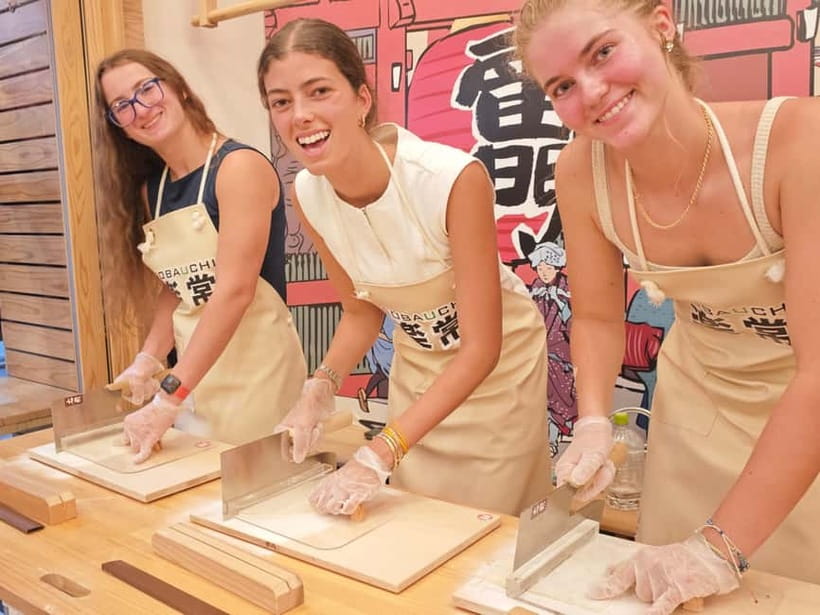
- Manual Noodle Cutting With a Big Knife
- Ramen Bowls and Flavor Choices: Soy, Miso, Shio, and Vegan
- Snacks, One Free Drink, and the Photo System
- Price and Value at $57: What You Get for One Hour
- Who Should Book and Who Should Skip It
- Your Best Plan in Asakusa: Combine With Sensoji and Shopping
- Should You Book SOBAGIRI-RAKUJYO?
- FAQ
- How long is the ramen noodle making experience?
- What is included in the ticket price?
- What does the one free drink include?
- Are there food restrictions for allergies or dietary needs?
- Can I enter just to watch the workshop?
- Is this activity suitable for children?
- What happens if a child can’t handle the heavy knife alone?
- Where do I meet for the experience?
- Is the workshop wheelchair accessible?
- Can I cancel and get a refund?
Key Things That Make This Ramen Workshop Work
- Knife-by-knife noodle cutting instead of pasta-machine tricks
- A 30-minute skill session that stays friendly to busy sightseeing days
- Bright, spacious, photo-friendly interiors in an open studio on the first floor
- Multiple ramen flavors, including soy sauce, miso, shio, and vegan options
- Included extras: one drink plus all-you-can-eat Japanese snacks
- Professional photo-taking with QR sharing (so you keep your phone clean)
First-Floor Kappabashi Studio: Bright Rooms and Old-School Tools
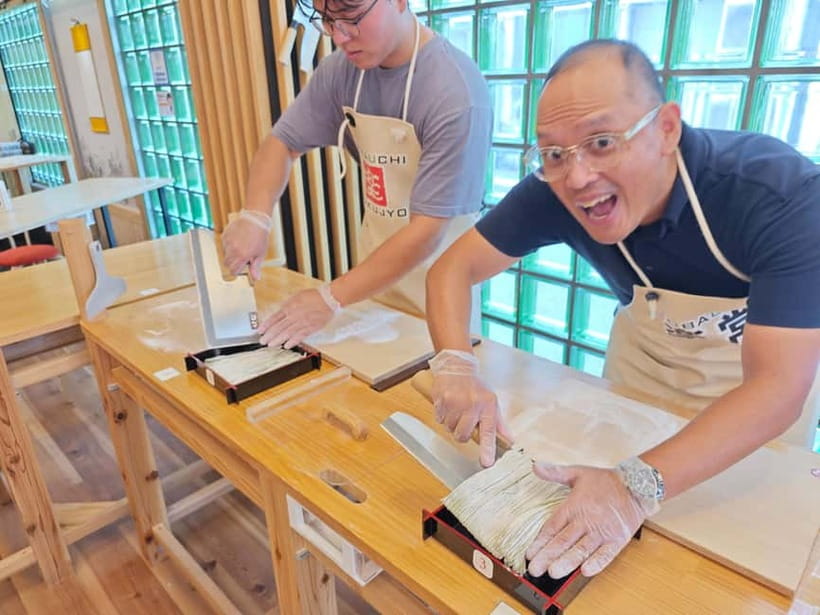
This ramen workshop is in Honshu, in Asakusa’s Kappabashi kitchenware district, a place where you can wander for cast-iron pots, knife tools, and tiny kitchen gadgets all day. SOBAGIRI-RAKUJYO sits on the first floor of an open kitchen studio, and the atmosphere is what you’d hope for: bright, clean, and stylish. It’s not that dim, powdery workshop vibe that makes you worry about hygiene or comfort.
You also get a visual treat: the interior is spacious and designed to look good in photos, with an authentic-feeling setup (including an actual system table). The studio can handle up to 30 people at once, but your specific session runs as a small group, capped at 6. That balance matters. Big enough to feel lively, small enough that instructors can guide you while you cut.
The core idea is simple and satisfying: you make noodles from flour, by hand, then you eat them. And the method is based on the kind of cutting technique passed down in Japan since the Edo period (1603–1868). You might have seen ramen noodles made with a machine; here, you’ll learn the manual knife technique, one strip at a time.
Practical note for your expectations: the workshop is hands-on. You won’t be hovering in the background unless you join in like everyone else.
50 Minutes From Reception to Your First Slurp
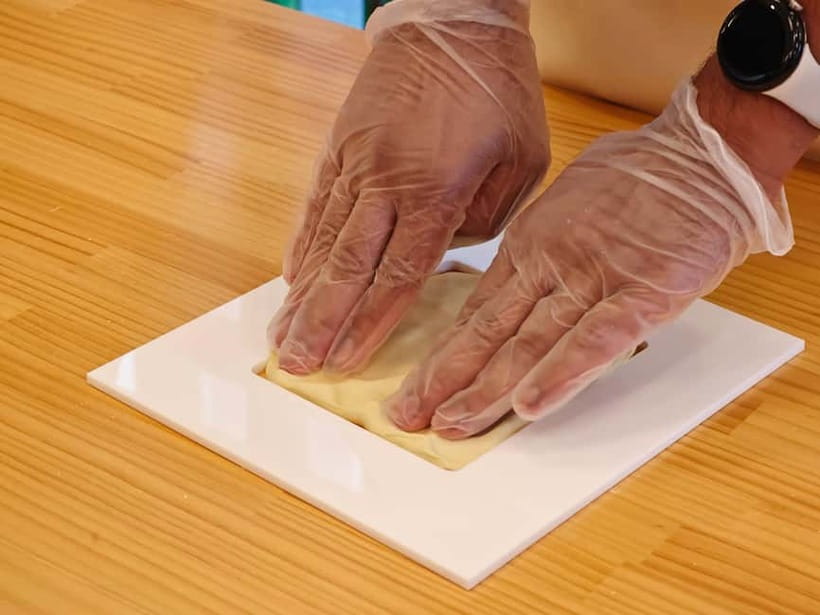
Timing is one of the smartest things about this experience. Even though the full “on the spot” process is around 50 minutes, it doesn’t drag. You start by arriving a bit early for reception and prep, then you move quickly through noodle making, cooking, and eating.
Here’s the flow, in plain terms:
- Reception about 10 minutes before your event time
- Wash your hands, get set up, and get instructions
- Noodle making for around 30 minutes
- Staff handles the cooking step
- Then you get meal time to eat the ramen bowl made from your noodles
That structure matters if you’re trying to fit Asakusa into a tight schedule. Asakusa Sensoji Temple is about a 25-minute walk away, and Kappabashi’s streets are made for strolling. If you’ve only got one free block of time, a 50-minute class is usually easier to slot than longer food tours.
The meal isn’t just a quick bite, either. The workshop includes a free drink and all-you-can-eat snack options during your eating time. So you’re not done the moment your noodles stop being raw; you get a proper pause to enjoy what you made.
One more useful expectation-setting point: kids can be involved, but the workshop uses a large, heavy knife, so the experience has safety rules. If a child can’t do the kneading or cutting on their own, they’ll pair with an adult.
Manual Noodle Cutting With a Big Knife
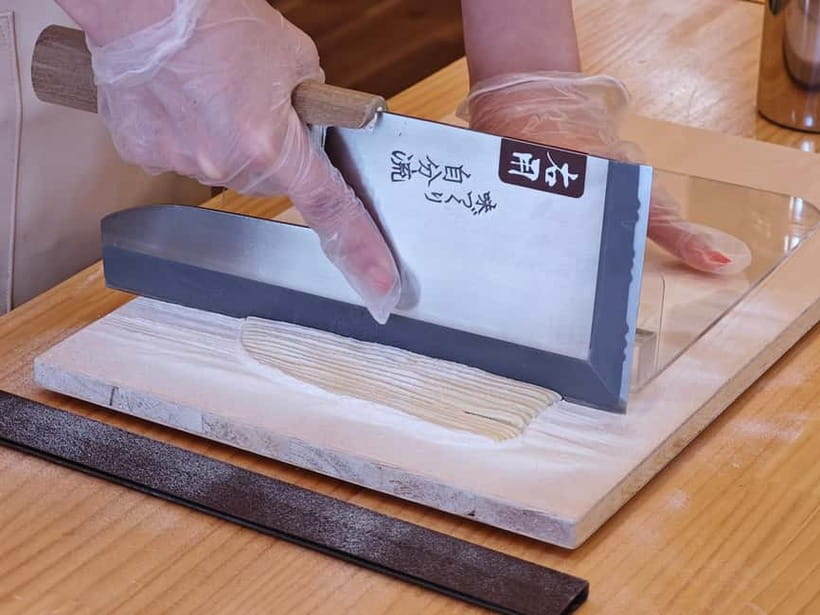
This is the moment that makes the whole thing feel real. You’ll learn to cut ramen noodles manually, using a large knife designed specifically for noodle cutting. Instead of relying on a machine, the focus is on your technique: how to slice thin, handle the strip-work carefully, and keep the process steady.
The experience also emphasizes a “new method” that finishes the full process—mixing flour with water, kneading, stretching, and cutting into thin strips—within about 30 minutes. That’s a big deal for two reasons.
First, it keeps you from getting stuck in the hardest part too long. If you’ve ever watched noodle-making, you know it can become a slow, gradual craft. Here, it’s condensed into a format that still teaches technique.
Second, it’s built for attention spans. Kids won’t feel stuck for a long time, and adults won’t feel like this steals half a day from the rest of Asakusa.
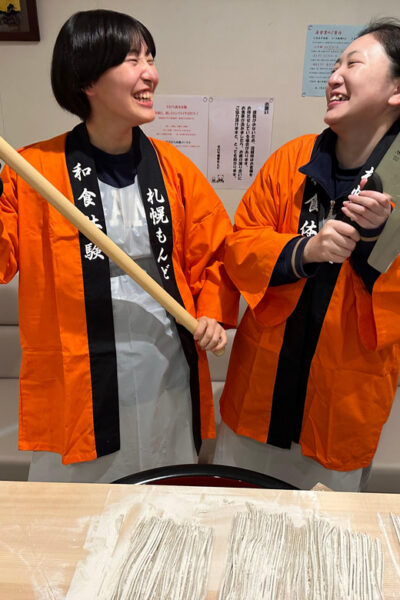
In practice, your instructor will teach safe and delicate cutting methods in a careful, slightly humorous way. Clear instructions are part of the package—people describe the teaching energy as friendly and easy to follow. And setup is professional enough that you don’t have to worry about your phone becoming an accessory to the flour pile. In fact, the staff take professional-style photos during the workshop, shared later via QR code, including edited versions.
If you care about food craft, this workshop gives you a skill you can talk about back home: you didn’t just order ramen. You made the noodle strips.
Ramen Bowls and Flavor Choices: Soy, Miso, Shio, and Vegan
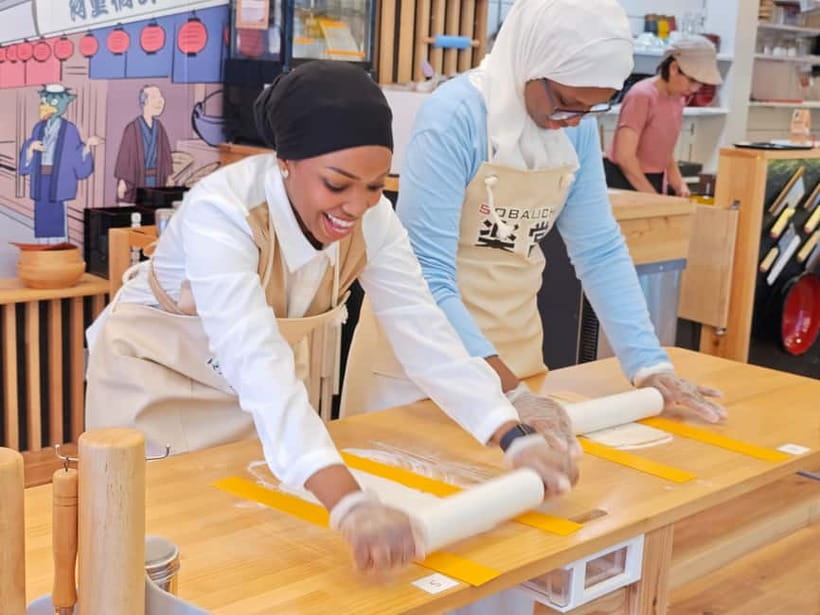
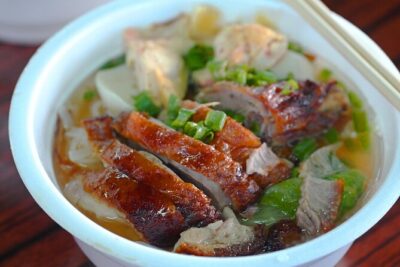
After noodle cutting, staff cooks the ramen so you can focus on eating. The noodles you make become the base of your meal, and the flavor lineup is broad enough to keep the table interesting.
You can expect choices like:
- Soy sauce ramen
- Miso ramen
- Shio ramen
- Vegan ramen
- Vegan soup curry ramen
And the food doesn’t stop at noodles and broth. Depending on what you choose, you’ll also get toppings and add-ons. Some participants mention options like egg and pork alongside the bowl (if you eat those ingredients). That’s a good sign for variety: you can tune your bowl rather than taking one preset option.
For a lot of people, the surprise is how good the noodles are. Fresh noodles have a different bite than dried ramen, and even if your strips aren’t perfectly identical, the final bowl comes out satisfying. It tastes like you contributed something, not like you just participated in an activity that produced a souvenir.
Also, one subtle advantage for non-experts: you’re not cooking the soup. Staff manages the broth, which lets you judge the noodle quality without needing to be the chef. If you’ve got dietary preferences, it’s reassuring that vegan choices are explicitly available.
Snacks, One Free Drink, and the Photo System
Food experiences in Japan often tempt you into paying twice: once for the class, then again for drinks and extras. Here, the meal time includes a little built-in comfort.
You get:
- One free drink (examples include beer, highball, lemon sour, juice, non-alcoholic beer, and more)
- All-you-can-eat snacks from Japanese manufacturers
This is value you feel immediately. After floury hands and careful knife cuts, you’ll want something to sip and nibble, and the included options prevent that “okay, now what do we order?” moment.
The other high point is the photo setup. You’re working with flour and tools, so taking clear pictures can be annoying. Instead, they take professional-style photos during the workshop and share them using a QR code afterward. People even mention that the edits can be ingenious, which is a fun way to get a souvenir without messing up your phone.
Practical advice: bring a drink posture. You’ll likely want to take a moment after eating to check the QR photo link. If you want to share quickly on social media, plan to keep your phone powered and ready right after the workshop.
Price and Value at $57: What You Get for One Hour
At about $57 per person, this isn’t a budget “snack and photo” activity. But it also isn’t priced like a full-day food tour. It lands in that sweet spot where you’re paying for hands-on instruction plus a meal built directly from your work.
Here’s what your money covers:
- The ramen noodle making experience
- A meal using the noodles you cut yourself
- One free drink
- All-you-can-eat Japanese snacks
That’s the value logic: you’re paying for skill + ingredient labor + staff cooking + a proper eating stop. Since the workshop is only about 50 minutes, you also avoid the cost of lost sightseeing time. In Asakusa, that matters. You can do this class and still shop on Kappabashi’s kitchenware streets or walk toward Sensoji.
Would I call it cheap? No. But I’d call it a good deal for what you actually do: you leave with a real food skill and a fresh bowl you can point to and say, I made that noodle strip.
The biggest “hidden value” is learning by doing in a controlled environment. You don’t have to guess at technique, and you don’t have to clean the mess.
Who Should Book and Who Should Skip It
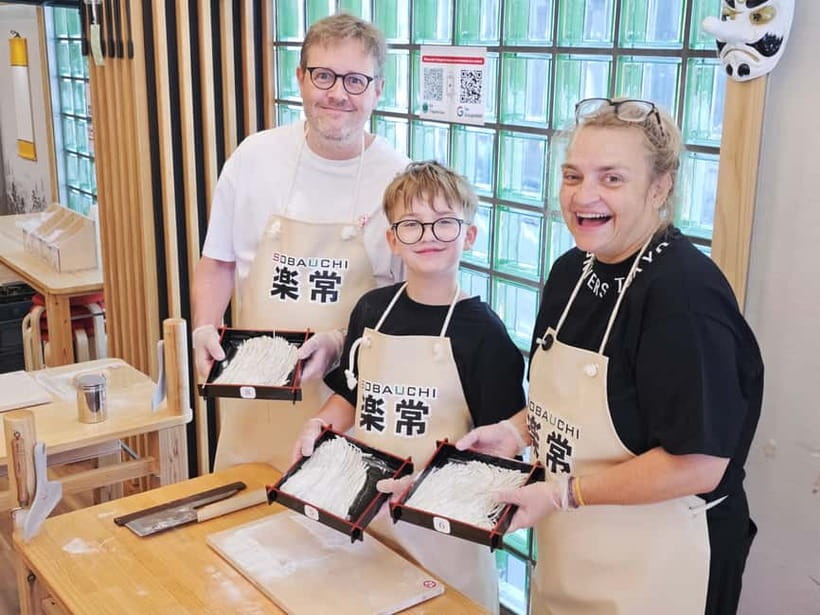
This workshop fits best if you want a hands-on cultural food experience that’s short, structured, and beginner-friendly. It’s also a solid choice if you’re traveling with kids who like activities and can follow instructions.
Good fit for:
- Food lovers who want more than tasting and want a skill
- Families who want a fast activity during a sightseeing day
- People who enjoy variety: soy, miso, shio, and vegan options are part of the meal
Special considerations you should take seriously:
- Buckwheat allergy: participation isn’t allowed
- Gluten intolerance: it’s listed as not suitable
- People with a cold: not suitable
- Injuries during the experience are the participant’s responsibility
Kids rules are also very specific. Solo participation for kids depends on their ability to knead and use a large, heavy knife by themselves. If that’s difficult, the child is paired with a parent, and one adult must accompany each child in parent-child pairs.
If you’re thinking about a “watch only” experience, plan to order and join in. The restaurant isn’t meant for observation-only entry.
One more logistics note: the class is small-group limited to 6 participants. If you’re the type who hates waiting, this helps. If you’re the type who wants a lot of free time to chat and wander after, you’ll still get snack and drink time, but the workshop itself keeps moving.
Your Best Plan in Asakusa: Combine With Sensoji and Shopping
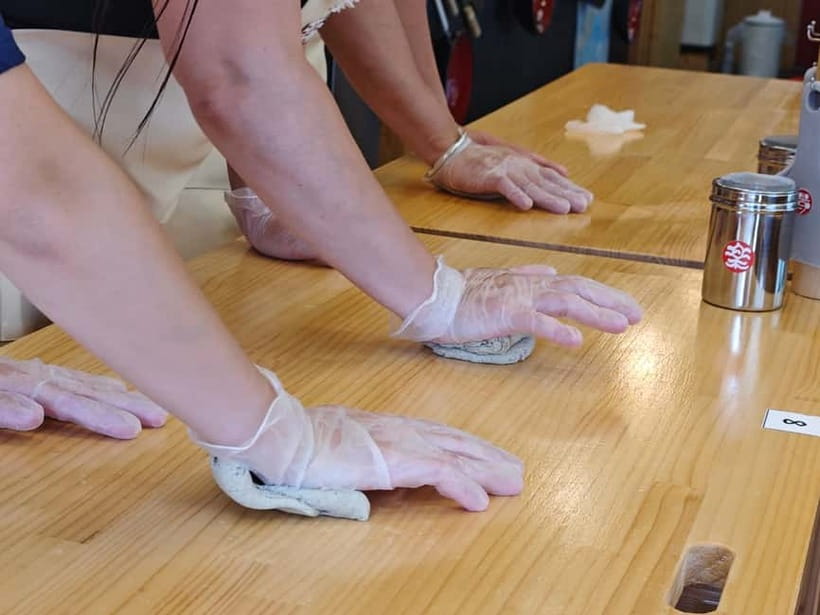
SOBAGIRI-RAKUJYO is about a 25-minute walk from Sensoji Temple, so you can structure your day without stress. A common approach is to pick one “big sight” and one “hand-on workshop.”
Here’s a practical way to think about it:
- Walk off toward Sensoji for the landmark experience
- Head back toward Kappabashi Kitchenware Street after
- Stop by the workshop on your schedule so the meal feels like a reward, not a chore
The meeting point is also straightforward: it’s diagonally across from a food sample specialty store with a large beetle objet d’art on Kappabashi Kitchenware Street. If you’re using transit or riding a taxi, you’ll still want to do a quick street-level check so you don’t lose time.
If you’re planning shopping after, remember the workshop includes flour work and hand washing. That means you’ll likely want to change your mindset from “I’ll browse with delicate bags” to “I’ll browse after I’ve eaten and kept things clean.” The professional photo system and clean setup help, but you should still plan to dress comfortably.
Finally, since you’ll want to arrive about 10 minutes before your reserved time, schedule buffer time like you would for any popular food activity in Asakusa.
Should You Book SOBAGIRI-RAKUJYO?
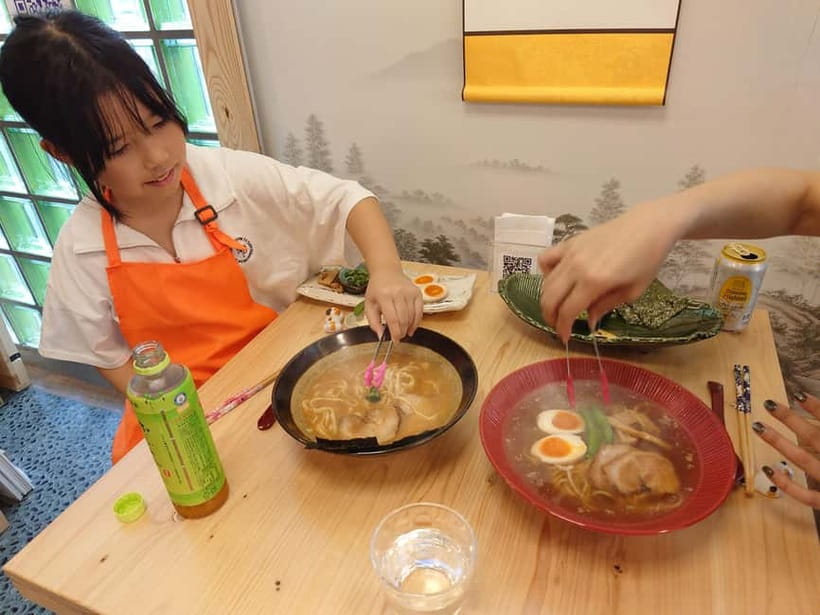
Book this if you want a short, hands-on ramen skill that ends with a fresh bowl you made yourself, plus one free drink and lots of snacks. The clean, bright open-kitchen studio, small group size, and the manual knife technique make it feel more like a craft lesson than a tourist demo.
Skip it if your needs don’t match the rules: buckwheat allergy, gluten intolerance, active cold, or if you mainly want to observe rather than participate. Also think carefully if you’re bringing very young kids, since the workshop has strict age suitability and knife safety requirements.
If you’re an Asakusa shopper who likes doing something practical in the middle of a walking day, this is one of the easiest “food experiences that doesn’t steal your whole afternoon” options.
FAQ
How long is the ramen noodle making experience?
The noodle making portion is about 30 minutes, and the overall experience is listed as 50 minutes. You should also arrive about 10 minutes before your reserved time for reception and prep.
What is included in the ticket price?
Your experience includes ramen noodle making, dining on the ramen cut by yourself, one free drink, and all-you-can-eat Japanese snacks.
What does the one free drink include?
You get to choose one drink, with examples including beer, highball, lemon sour, juice, and non-alcoholic beer.
Are there food restrictions for allergies or dietary needs?
Yes. People with buckwheat allergies are not allowed. Gluten intolerance is listed as not suitable as well.
Can I enter just to watch the workshop?
No. As a rule, it isn’t possible to enter for observation only. You should plan to order and participate.
Is this activity suitable for children?
Children under 2 years, under 3 years, and babies under 1 year are listed as not suitable. For kids who participate solo, they need the ability to knead and use a large, heavy knife by themselves.
What happens if a child can’t handle the heavy knife alone?
If a child can’t do it safely on their own, they will be paired with a parent to participate. In parent-child pairs, one adult must accompany each child.
Where do I meet for the experience?
Meet diagonally across from a food sample specialty store with a large beetle objet d’art on Kappabashi Kitchenware Street.
Is the workshop wheelchair accessible?
Yes, it is listed as wheelchair accessible.
Can I cancel and get a refund?
Yes. There is free cancellation up to 24 hours in advance for a full refund.